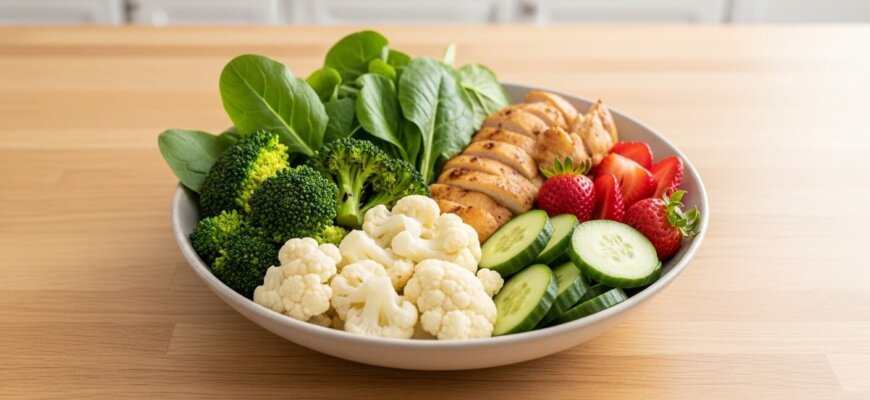
Managing hunger while working toward weight loss doesn’t require eating tiny portions of bland food. Focusing on high-volume low-calorie foods lets you eat satisfying amounts while staying within your calorie targets. These foods are mostly water and fiber—ingredients that fill your stomach and trigger fullness signals without delivering excess energy.
- Crunchy Vegetables That Fill You Up
- Salad Greens and Their Nutrient Density
- Cruciferous Powerhouses: Broccoli and Cauliflower
- Fruits for a Sweet and Satisfying Boost
- Berries: Small But Mighty Antioxidant Sources
- Melons: Hydrating and Voluminous Fruit Choices
- Lean Proteins to Manage Hunger
- Skinless Poultry and Fish for Muscle Support
- Plant-Based Protein: Tofu and Legumes
- Soups and Broths for Meal Starters
- Vegetable Soups: Nutrient-Rich and Warming
- Clear Broths for Flavor Without Excess Calories
- Dairy and Alternatives for Creamy Satisfaction
- Greek Yogurt: Protein-Packed and Versatile
- Cottage Cheese: A Filling Snack or Meal Addition
- Incorporating High-Volume Low-Calorie Foods into Daily Meals
- Meal Prepping for Consistent Choices
- Smart Swaps and Additions to Boost Volume
- Limitations and Individual Differences
- FAQ
- What are some good low-calorie filling foods for snacks?
- How does volume eating for weight loss actually work?
- Can these satiety foods help control cravings?
- Conclusion
Crunchy Vegetables That Fill You Up
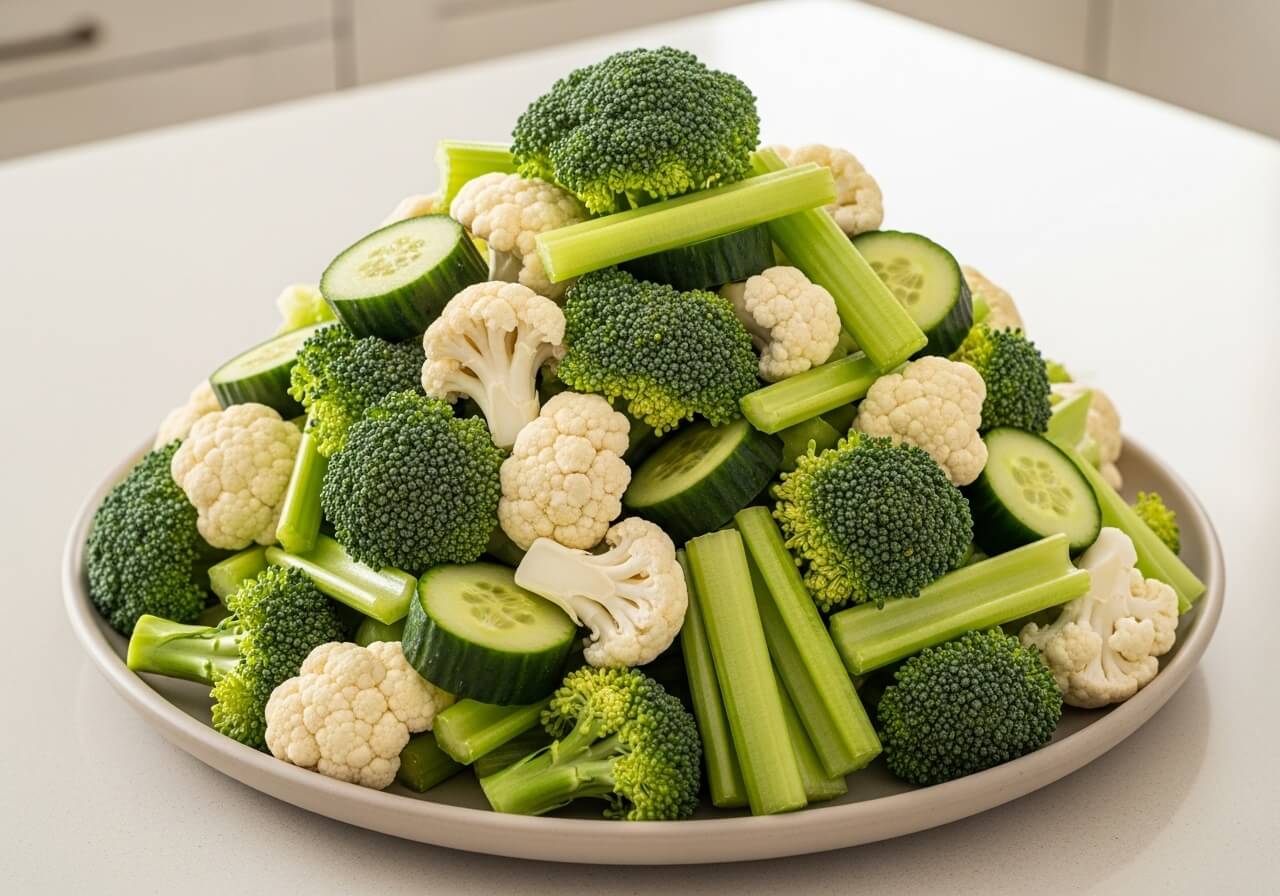
Non-starchy vegetables contain roughly 20–35 calories per 100 grams while being approximately 90% water. This means you can eat a large bowl of vegetables and barely make a dent in your daily calorie budget. When your stomach expands from food volume, it sends satiety signals to your brain that can reduce subsequent food intake.
Salad Greens and Their Nutrient Density
Spinach, lettuce, kale, and other leafy greens are nearly calorie-free additions to any meal. Adding 2 cups of raw spinach to your lunch sandwich adds only 14 calories while noticeably increasing portion size. The fiber in these greens helps slow digestion, which may extend feelings of fullness. Darker greens like spinach and kale also contain more micronutrients than iceberg lettuce, providing nutritional value alongside volume.
Cruciferous Powerhouses: Broccoli and Cauliflower
Broccoli and cauliflower are denser than leafy greens but still contain minimal calories per serving. Roasted cauliflower satisfies the need for something crunchy and substantial, while broccoli works well in stir-fries, soups, or as a side dish. Both vegetables provide fiber that contributes to satiety, making them useful when you want a meal that feels complete.
Fruits for a Sweet and Satisfying Boost
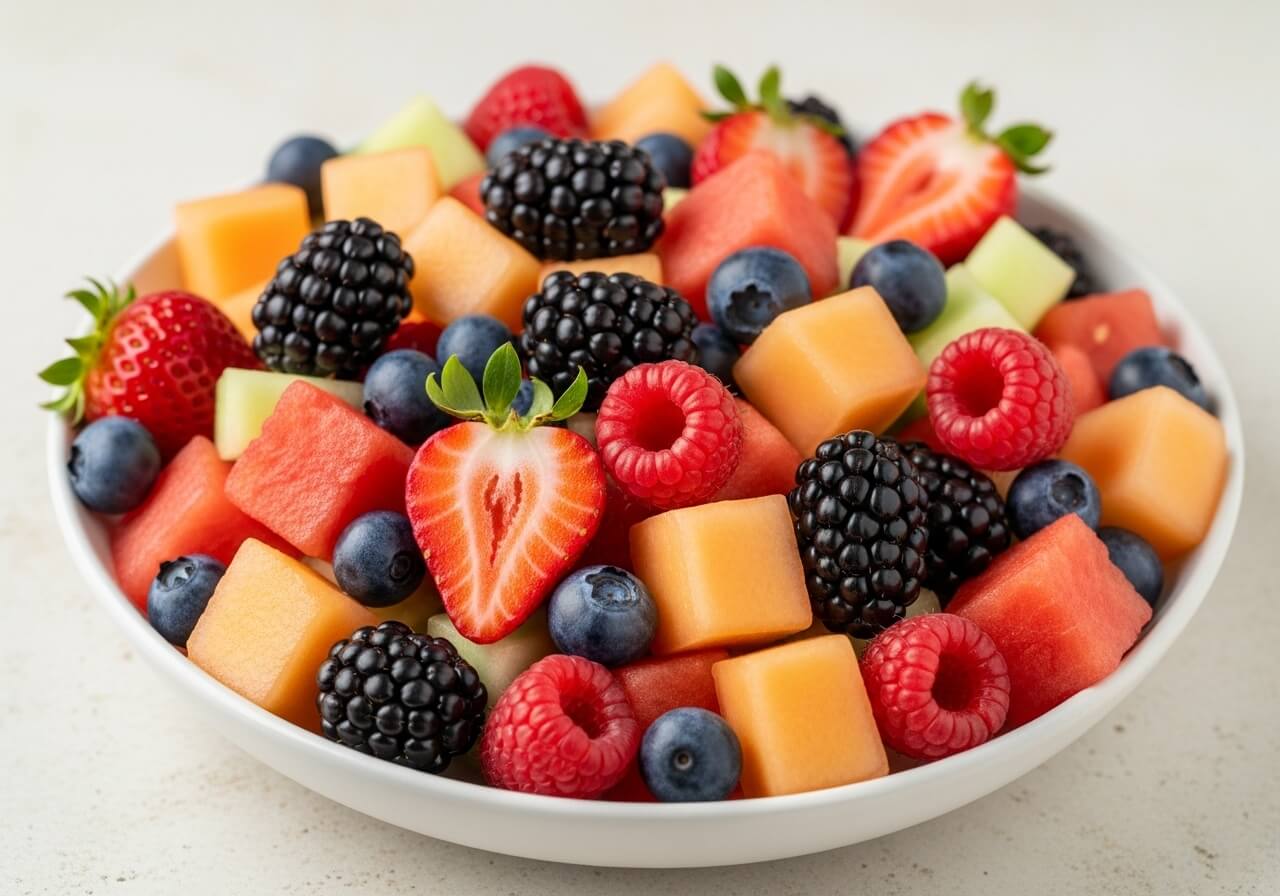
Fruits with high water content deliver natural sweetness without the caloric density of processed sweets. When you’re craving something sweet, a cup of fresh fruit often satisfies that urge while adding volume to your meal or snack.
Berries: Small But Mighty Antioxidant Sources
Strawberries, raspberries, and blueberries provide 50–70 calories per cup with fiber content that supports hunger management. A cup of berries feels like a substantial snack because of their small individual size. Choosing 1 cup of strawberries (approximately 50 calories) over 1 ounce of cheese (approximately 100 calories) gives you double the volume for half the energy.
Melons: Hydrating and Voluminous Fruit Choices
Watermelon and cantaloupe are roughly 90% water, making them exceptionally voluminous choices. A large bowl of watermelon cubes provides significant eating time and satiety for very few calories. Their low caloric density means you’d need to eat an unrealistic amount to significantly exceed your targets.
Lean Proteins to Manage Hunger
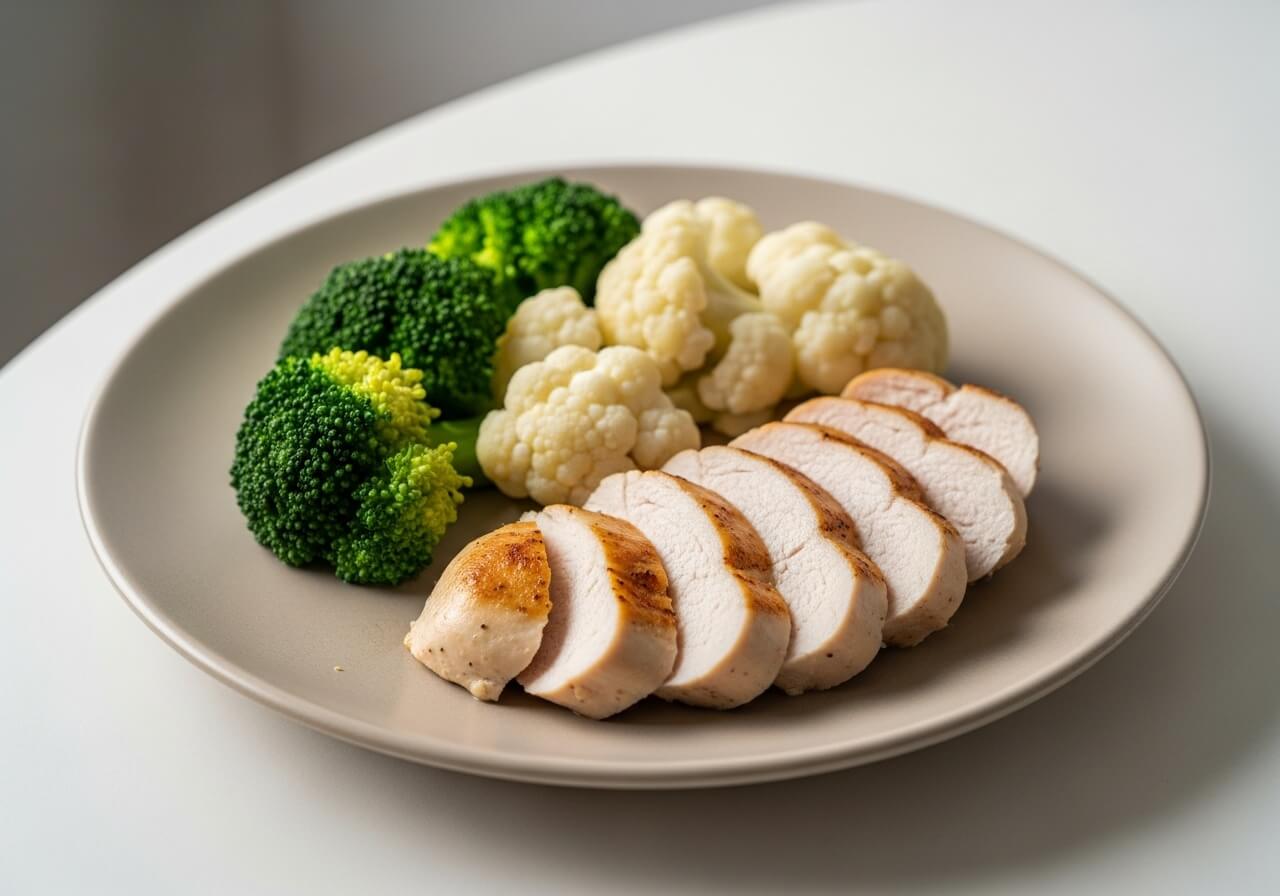
Protein tends to increase satiety more effectively than carbohydrates or fats per calorie consumed. Lean protein sources like skinless chicken breast and white fish contain 20–25 grams of protein per 100 grams. Including lean protein in meals helps ensure that high-volume vegetables and fruits translate into lasting fullness rather than hunger returning an hour later.
Skinless Poultry and Fish for Muscle Support
Skinless chicken breast and white fish like cod or tilapia are lean protein sources with minimal fat. A 150-gram cooked serving of skinless chicken breast provides roughly 165 calories and 31 grams of protein. Adding this to a vegetable-based meal transforms it from a salad into a more complete meal that may sustain energy and help prevent the snacking that often follows inadequate protein intake.
Plant-Based Protein: Tofu and Legumes
For vegetarian and vegan diets, tofu and legumes like lentils and chickpeas offer protein alongside fiber. Tofu is particularly valuable because it’s relatively low in calories and absorbs flavors easily, making it adaptable to different cuisines. Legumes contain both protein and significant fiber, which creates a double mechanism for satiety.
Soups and Broths for Meal Starters
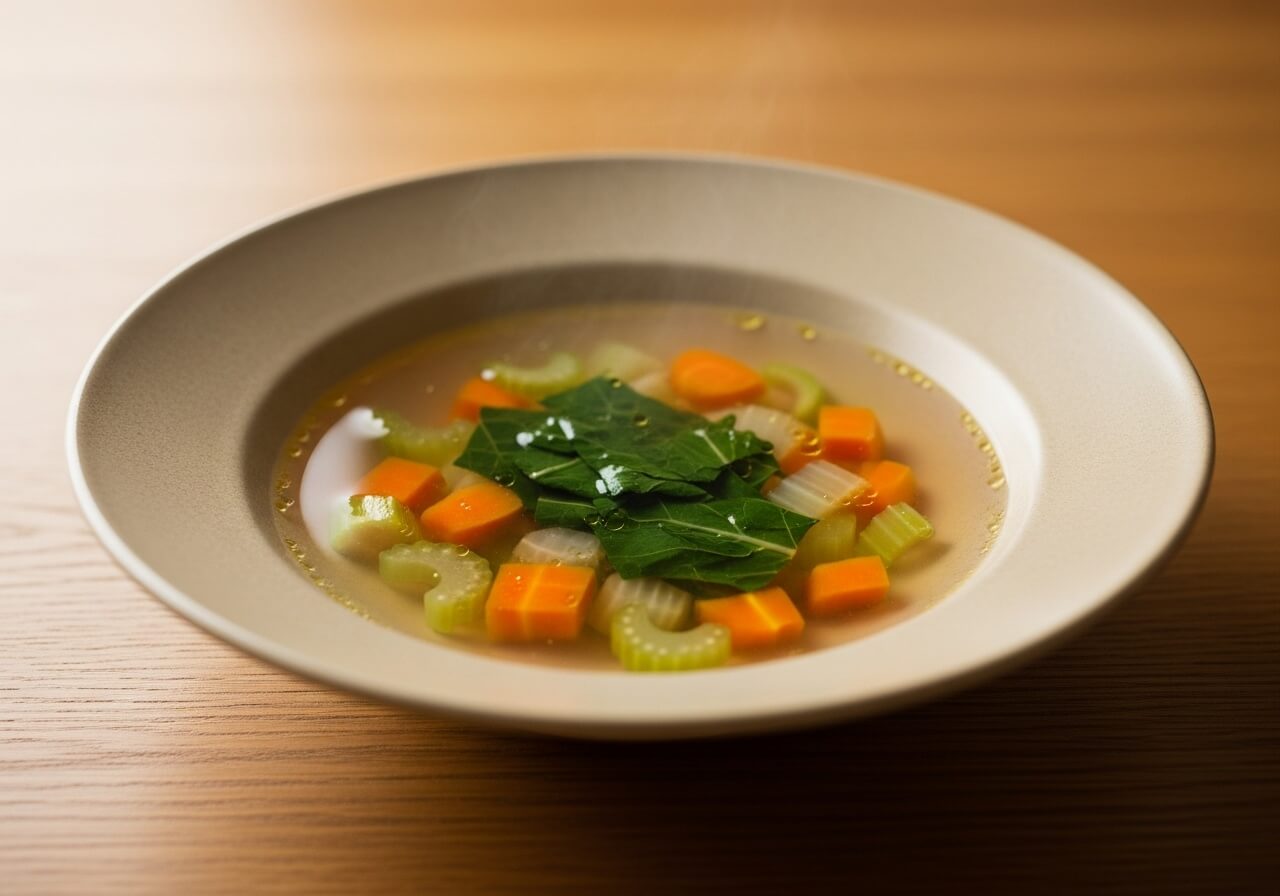
Liquid-based meals may increase satiety differently than solid food. Starting a meal with soup or broth before eating solid food can potentially reduce overall calorie intake during that meal because the liquid takes up stomach space quickly.
Vegetable Soups: Nutrient-Rich and Warming
A vegetable soup made from non-starchy vegetables, low-sodium broth, and minimal oil provides substantial volume with controlled calories. The warmth of soup also contributes to perceived satisfaction—hot food takes longer to eat than cold food, giving satiety signals time to register. Making soup from whole vegetables rather than using cream-based varieties maintains the high-volume, low-calorie profile.
Clear Broths for Flavor Without Excess Calories
Clear broths like chicken or vegetable broth add flavor and volume without significant calories. Use them as a base for soups, a side during meals, or even as a savory drink that fills your stomach without breaking your calorie targets. This is distinct from cream-based broths, which substantially increase caloric content.
Dairy and Alternatives for Creamy Satisfaction
Low-fat dairy and plant-based alternatives provide protein and creaminess that make high-volume eating feel less restrictive. These foods satisfy the desire for something rich without the caloric load of full-fat versions.
Greek Yogurt: Protein-Packed and Versatile
Greek yogurt contains nearly twice the protein of regular yogurt. A 150-gram serving of non-fat Greek yogurt provides roughly 100 calories and 18 grams of protein. You can eat it plain, mix it with berries for a snack, or use it as a base for creamy sauces that would otherwise require oil or full-fat dairy.
Cottage Cheese: A Filling Snack or Meal Addition
Low-fat cottage cheese provides protein and a creamy texture that satisfies cravings for substantial food. Its distinct texture makes it satisfying as a standalone snack. A half-cup of low-fat cottage cheese contains roughly 110 calories and 14 grams of protein.
Incorporating High-Volume Low-Calorie Foods into Daily Meals
Knowing which foods support satiety is only useful if you actually include them in your diet. The practical challenge is integrating these foods into your existing eating patterns without treating it as a special diet.
Meal Prepping for Consistent Choices
Preparing vegetables in advance removes the barrier to eating them. If raw broccoli, cauliflower, and spinach are already washed and stored in your refrigerator, you’re more likely to add them to meals. Similarly, cooking a batch of lean protein like grilled chicken breast allows you to quickly add protein to any meal throughout the week. If the high-volume option is more accessible than less nutritious alternatives, you’ll naturally eat more of it.
Smart Swaps and Additions to Boost Volume
Rather than redesigning your diet entirely, identify one meal per day where you can increase volume. If you typically eat a sandwich for lunch, adding 2 cups of salad greens increases portion size without significantly changing preparation time. If dinner is usually rice and protein, replacing half the rice with cauliflower rice maintains texture while reducing calories. These adjustments make meals feel more substantial without feeling like sacrifices.
Limitations and Individual Differences
High-volume eating may help many people manage hunger, but it’s not universally suitable. Individuals with irritable bowel syndrome or sensitive digestion may experience bloating from high-fiber vegetables and fruits. In these cases, focusing on cooked vegetables and lower-fiber high-volume options may work better.
Volume eating alone cannot override total energy intake. Even low-calorie foods contribute to weight gain if your total daily calories exceed your needs. The primary driver of weight change remains energy balance—consuming fewer calories than you expend. High-volume foods are a tool that may make this more achievable by helping reduce hunger, not a bypass around calorie management.
Some people find psychological difficulty with eating very large volumes of low-calorie food, preferring smaller portions of more calorie-dense options. This is a valid preference, and either approach can work if total calories remain appropriate for your goals.
FAQ
What are some good low-calorie filling foods for snacks?
Raw vegetables like carrots, bell peppers, and cucumber with a protein addition like 2 tablespoons of hummus or low-fat Greek yogurt work well. A cup of berries with a small handful of almonds combines natural sweetness with protein and fiber. Air-popped popcorn (without added oil) is another option, though oil-popped popcorn dramatically increases caloric content.
How does volume eating for weight loss actually work?
Volume eating may create a calorie deficit while reducing hunger because high-water, high-fiber foods occupy stomach space and trigger fullness signals without delivering many calories. The mechanism isn’t that these foods “burn fat”—it’s that they allow you to eat satisfying portions within a calorie target. Weight loss occurs when total calories consumed stay below your daily needs; high-volume foods may make this more achievable without constant hunger.
Can these satiety foods help control cravings?
When you’re adequately full from high-volume foods, cravings for sweets or snacks may decrease because your hunger signals aren’t constantly active. However, satiety foods don’t eliminate emotional eating or cravings triggered by stress or habit. If you eat when bored or stressed rather than hungry, increasing volume at meals won’t fully address that pattern.
Conclusion
Building meals around vegetables, lean proteins, fruits, and strategic dairy choices creates eating patterns that may feel sustainable rather than restrictive. Start by adding one high-volume, low-calorie food to your next meal—a serving of roasted vegetables, a bowl of berries, or a cup of broth-based soup. Small changes add up, and the easiest approach is the one you’ll actually maintain.