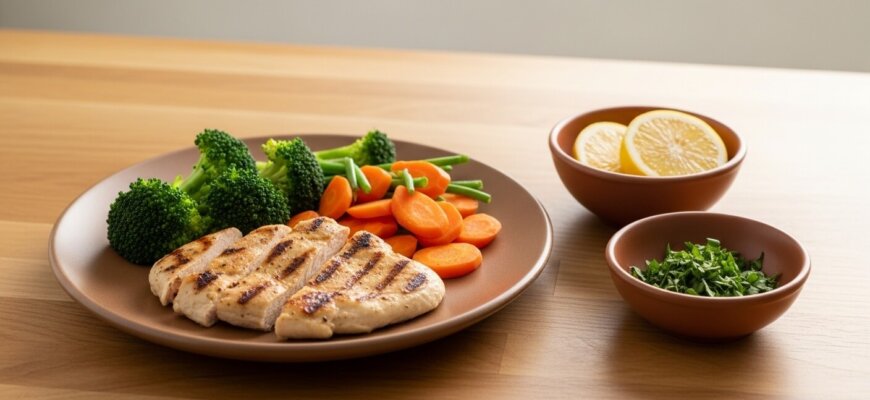
Daily sodium intake guidelines give you a clear target for protecting cardiovascular health—and most people unknowingly exceed safe limits through everyday foods. Adults typically aim for no more than 2,300 mg of sodium daily, though those managing high blood pressure benefit from targeting 1,500 mg instead. This guide walks you through practical steps to reduce sodium by swapping high-sodium staples for fresh alternatives and using herbs, acids, and spices as sodium replacement seasonings without sacrificing flavor.
- Recommended Daily Sodium Limits
- How much sodium per day major health organizations recommend
- When lower intakes benefit your health most
- Reading Sodium on Nutrition Labels
- Spotting milligrams of sodium versus daily value percentages
- Calculating sodium totals across multiple ingredients
- Planning Low-Sodium Meals That Actually Taste Good
- Swapping high-sodium staples for fresh alternatives
- Using herbs, spices, and acids as sodium replacement seasonings
- Tracking Your Sodium Throughout the Day
- Daily logging methods that don’t take much time
- Blood pressure sodium reduction targets to aim for
- Fixing Common Low-Sodium Diet Pitfalls
- Overcompensating with processed low-sodium substitutes
- Missing the mark on portion control with sodium-heavy foods
- FAQ
- How much sodium per day is safe for blood pressure management?
- What are the easiest low sodium diet foods to start eating?
- Do sodium replacement seasonings actually work for flavor?
- Conclusion
Recommended Daily Sodium Limits
How much sodium per day major health organizations recommend
The American Heart Association recommends that adults and teens aged 14 and older limit sodium to no more than 2,300 mg per day—roughly equivalent to one teaspoon of table salt. However, if you have high blood pressure, heart disease, or are at elevated risk, the optimal target drops to 1,500 mg daily.
The FDA and Dietary Guidelines for Americans set the Daily Value for sodium at less than 2,300 mg per day. For children, limits are lower based on age—ages 1 to 3 require only 1,200 mg daily, while ages 9 to 13 need 1,800 mg. These thresholds adjust downward because smaller bodies require less total sodium than adults.
The World Health Organization recommends limiting sodium to less than 2,000 mg daily for adults globally, noting that reductions below 5 grams of salt per day (roughly 2,000 mg sodium) may lower blood pressure and cardiovascular risk for most populations.
When lower intakes benefit your health most
The 1,500 mg target matters most if you have a diagnosis of hypertension, heart disease, diabetes, or chronic kidney disease. For healthy individuals with normal blood pressure and no family history of heart disease, the 2,300 mg threshold provides a practical ceiling.
Individual response to sodium varies. Some people’s blood pressure responds significantly to sodium reduction; others see modest changes. Genetics, weight, activity level, and potassium intake all influence how your body handles sodium. A personalized approach—guided by your doctor if you have any cardiovascular concerns—works better than applying the same target to everyone.
Reading Sodium on Nutrition Labels
Spotting milligrams of sodium versus daily value percentages
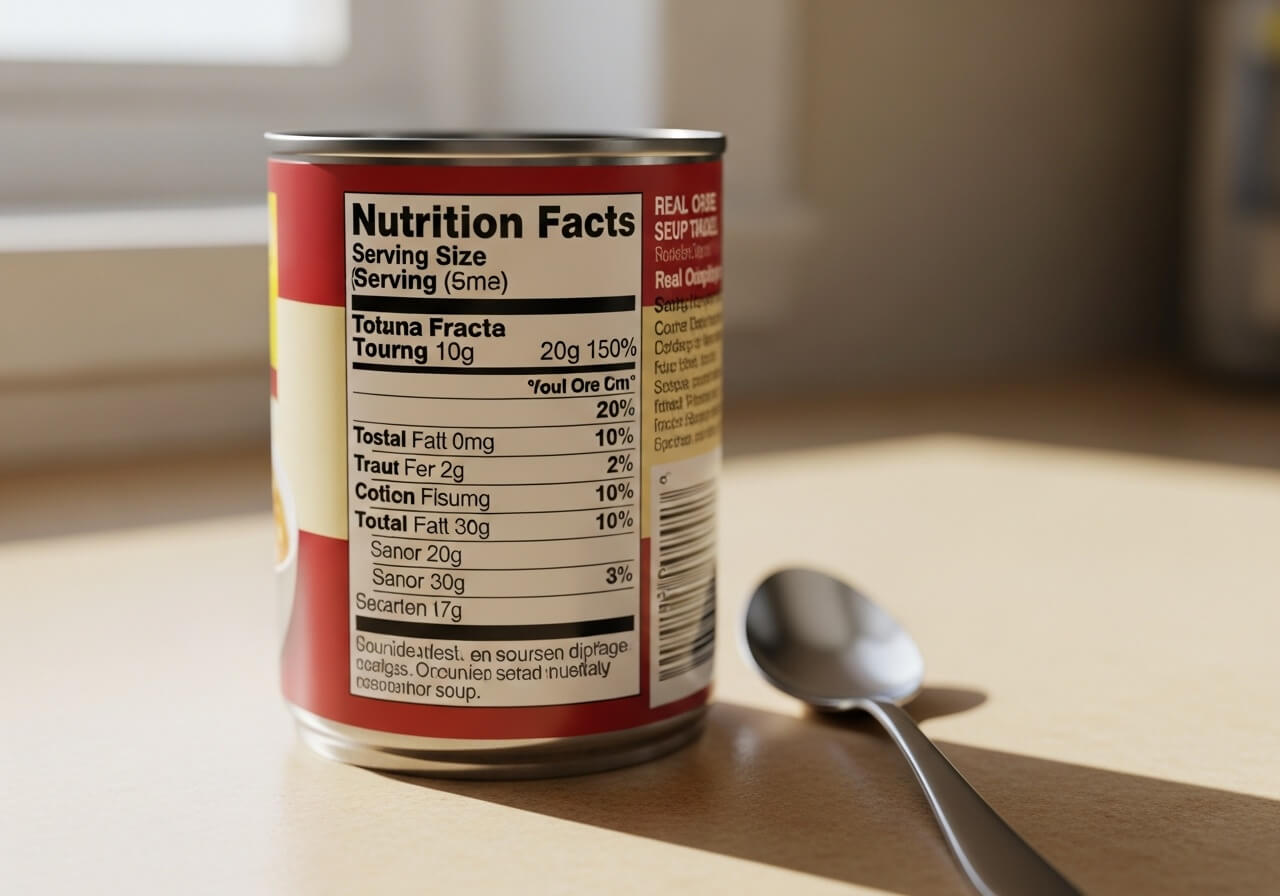
Nutrition labels list sodium in two ways: absolute milligrams and percentage of daily value (%DV). The milligram amount tells you the actual dose; the %DV shows how much of the 2,300 mg daily reference value that serving represents. A serving with 230 mg sodium equals 10% DV.
The FDA defines “low sodium” as 5% DV or less per serving—that’s 115 mg or fewer. Many foods labeled “low sodium” still contain 50 to 115 mg per serving, which adds up quickly when you eat multiple portions or combine several items in one meal.
Watch the serving size listed on the label. A can of soup might show 900 mg sodium per serving, but if the can holds two servings and you eat the whole thing, you’ve consumed 1,800 mg—nearly the entire daily allowance for someone managing high blood pressure.
Calculating sodium totals across multiple ingredients
Real meals combine ingredients, and sodium adds across the board. If you make a sandwich using sliced deli turkey (600 mg per 3-ounce serving), two slices of whole wheat bread (200 mg combined), and a tablespoon of mayonnaise (100 mg), you’ve hit 900 mg before adding any side dish.
A practical tracking method: write down the sodium content of three to five meals you typically eat, then add the columns. Most people discover they hit 2,300 mg by mid-afternoon. That one-time calculation often motivates real change better than abstract guidance does.
Planning Low-Sodium Meals That Actually Taste Good
Swapping high-sodium staples for fresh alternatives
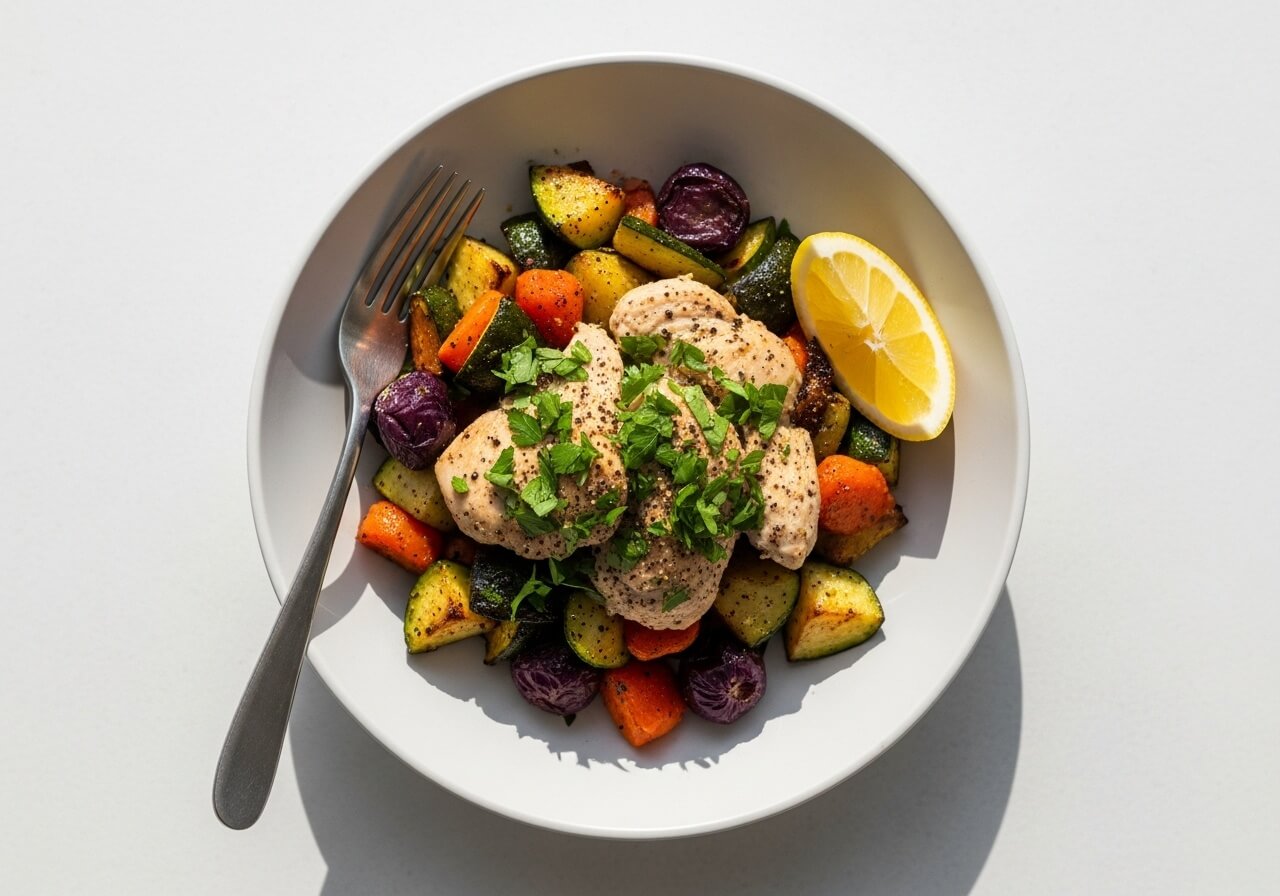
Processed foods contribute most of the sodium in typical Western diets, so the biggest impact comes from choosing fresh ingredients over packaged ones. A homemade stir-fry using fresh chicken (50 mg sodium per 3 oz cooked), fresh vegetables (negligible sodium), and homemade sauce contains 200 to 300 mg total. The same meal from a frozen dinner adds up to 800 to 1,200 mg.
Common high-sodium foods and practical swaps:
- Canned soups (700–900 mg per serving) → homemade or low-sodium broth-based soups
- Deli meats (500–700 mg per 2-ounce serving) → roasted chicken breast you cook yourself (50 mg per 3 oz cooked)
- Canned beans (300–400 mg per cup) → dried beans you cook with no salt added, or rinsed canned beans (sodium reduced by roughly 40% through rinsing)
- Flavored instant rice or pasta (300–500 mg per packet) → plain rice or pasta with fresh herbs and butter
- Store-bought tomato sauce (500–800 mg per cup) → crushed canned tomatoes with fresh garlic and basil (150 mg per cup)
Switching just two or three of these staples can reduce daily sodium intake by 500 to 800 mg without complicated meal planning.
Using herbs, spices, and acids as sodium replacement seasonings
Salt provides both taste and texture, so removing it creates a gap. Fresh herbs like cilantro, basil, parsley, and dill add brightness. Dried spices—cumin, smoked paprika, black pepper, garlic powder—build depth. Acids like lemon juice, lime juice, vinegar, and tomato juice add punch that compensates for salt’s absence.
A practical formula: start with fresh garlic or onion (sautéed until fragrant), add your main protein or vegetable, then finish with a combination of dried spice (1 to 2 teaspoons), fresh herb (2 to 3 tablespoons chopped), and acid (1 to 2 tablespoons lemon juice or vinegar). Meals built this way contain 200 to 400 mg sodium total—a 300 to 500 mg reduction compared to using the same recipe with regular salt.
Black pepper, which has virtually no sodium, becomes your default finishing seasoning. Adding it last—after cooking—delivers more flavor intensity than incorporating it early. Hot sauce made from vinegar and peppers (typically 100–200 mg sodium per tablespoon) adds spice while keeping sodium moderate, compared to soy sauce or Worcestershire sauce, which can contain 300+ mg per tablespoon.
Tracking Your Sodium Throughout the Day
Daily logging methods that don’t take much time
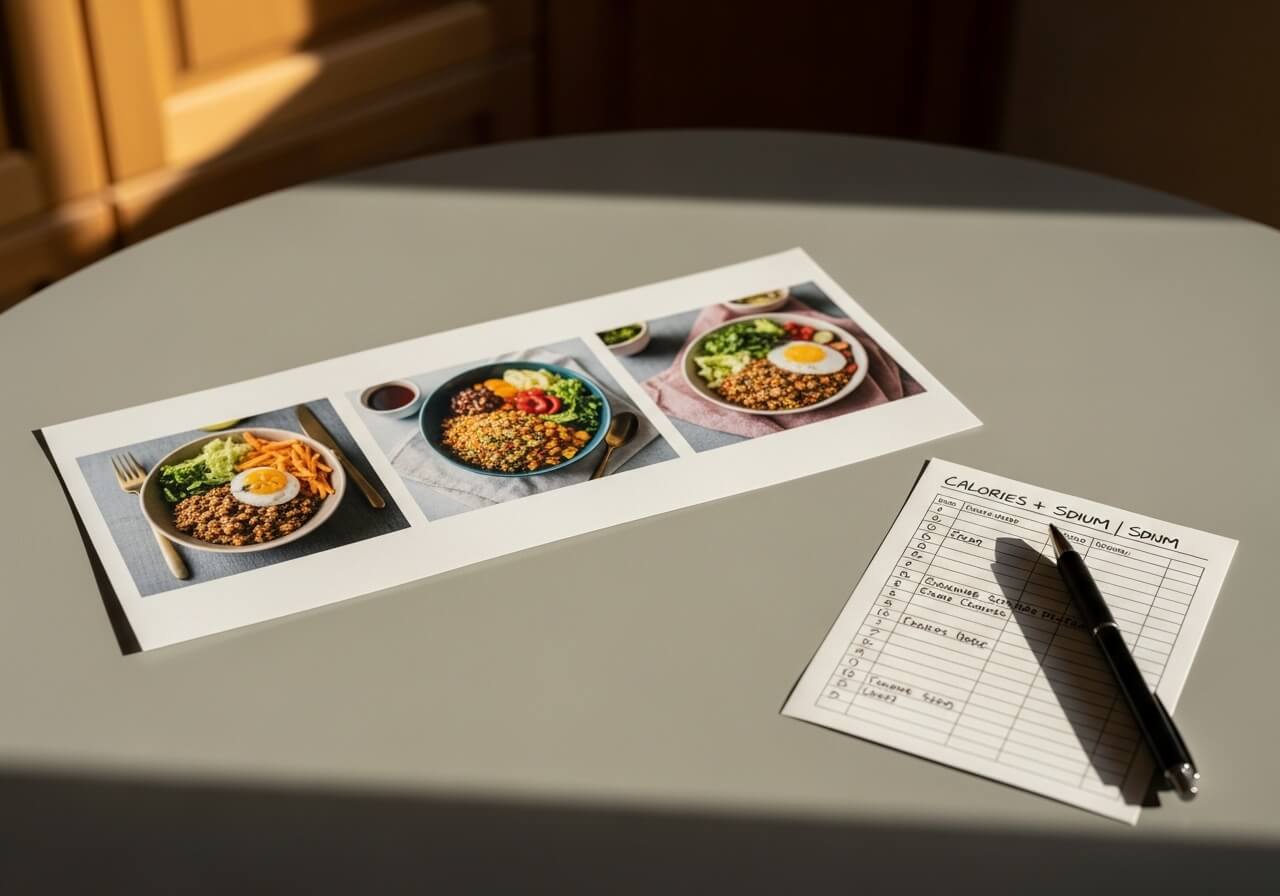
A middle-ground approach: take a photo of each meal for three days, then add up the sodium from labels or a food app. That one-week investment reveals patterns without requiring daily logging forever. Most people discover sodium clusters around breakfast (cured meats, cheese, bread) or lunch (sandwiches, canned soup, packaged snacks).
Once you identify your highest-sodium meals, focus changes there. If breakfast accounts for 800 mg sodium because of bacon, sausage, and cheese, switching to eggs, fresh fruit, and whole grain toast drops that meal to 200 mg—an instant 600 mg daily reduction.
Using a smartphone app like the USDA’s FoodData Central or a simple spreadsheet works equally well. After two weeks of tracking, most people can eyeball sodium content accurately enough to stay within their target without ongoing data entry.
Blood pressure sodium reduction targets to aim for
If you’re managing high blood pressure, aim to hit your personal target five days per week at minimum. If your goal is 1,500 mg daily, hit it Tuesday through Saturday, allow flexibility Sunday and Monday. This approach builds a sustainable pattern without the rigidity that leads people to abandon sodium reduction entirely.
Gradual reduction works better than sudden restriction. If you currently eat 3,500 mg daily, drop to 3,000 mg for two weeks, then 2,500 mg for the next two weeks. By month two, hitting 2,300 mg feels less jarring. Your taste preferences may shift—salty foods can start tasting unpleasantly salty—which means you don’t feel deprived.
If you monitor blood pressure at home, tracking weekly can provide concrete motivation. Many people see measurable changes within two to four weeks of consistent sodium reduction.
Fixing Common Low-Sodium Diet Pitfalls
Overcompensating with processed low-sodium substitutes
Low-sodium packaged foods often contain added sugar or fat to compensate for salt’s flavor contribution. A low-sodium frozen dinner might contain 800 mg sodium instead of 1,200 mg—a 30% reduction—but adds 20 grams of sugar to achieve acceptable taste.
The solution isn’t to buy low-sodium versions of processed foods; it’s to reduce reliance on processed foods entirely. When you do buy packaged items, read the full nutrition panel. If sodium dropped but sugar jumped above 5 grams per serving in savory foods, the trade-off may not be worthwhile.
Sodium replacement seasonings marketed as salt substitutes—products containing potassium chloride—do reduce sodium but can carry a bitter aftertaste and may cause problems for people with kidney disease or those taking certain medications. Whole herbs, spices, and acids work consistently and safely for virtually everyone.
Missing the mark on portion control with sodium-heavy foods
People often assume they can eat a high-sodium food in moderation and stay within limits. A serving of canned tuna (300 mg sodium) seems reasonable until someone eats two cans for lunch, then adds a processed snack (200 mg) and takeout for dinner (1,000 mg), totaling 1,800 mg before the day ends.
A clearer approach: identify which foods you eat regularly that exceed 300 mg sodium per serving. If that list includes bread, deli meat, cheese, canned vegetables, or condiments, and you eat all of them in a single day, you’ve built a meal pattern that resists sodium reduction. Choose two or three of these items per day instead of five or six. If you eat deli turkey and cheese for lunch, skip the high-sodium bread and canned soup; choose whole grain bread with less salt plus fresh vegetables and broth instead.
FAQ
How much sodium per day is safe for blood pressure management?
For adults with high blood pressure, heart disease, or related risk factors, 1,500 mg daily is the optimal target supported by major health organizations. Healthy adults with normal blood pressure can safely maintain 2,300 mg daily as an upper limit. Your doctor can help determine which target applies to your situation based on your blood pressure readings, family history, and any existing diagnoses.
What are the easiest low sodium diet foods to start eating?
Fresh foods contain minimal sodium by default: eggs (55 mg per large egg), plain rice or pasta (negligible sodium), fresh poultry and fish (50–100 mg per 3-ounce cooked serving), frozen vegetables without sauce (10–50 mg per cup), potatoes, sweet potatoes, and fresh fruit. Start by making one meal daily—breakfast or dinner—from these fresh ingredients, then expand as you build confidence.
Do sodium replacement seasonings actually work for flavor?
Yes, but the approach differs from salt. Salt provides a single type of flavor enhancement; herbs, spices, and acids provide varied flavors that create complexity. A meal seasoned entirely with salt tastes salty; a meal built with garlic, cumin, black pepper, and lime juice tastes rich and interesting without salt’s contribution. The first week feels like an adjustment because you’re not getting the salt taste your palate expects. By week two or three, this shift becomes more natural. The key is not trying to replicate salt’s exact taste, but building different satisfying flavors instead.
Conclusion
Swapping three to four high-sodium staples for fresh alternatives and building meals around herbs, spices, and acids typically reduces daily intake by 500 to 800 mg without complicated cooking. Start with one meal per day or one high-sodium food swap this week. Sustainable change happens gradually, and small reductions add up to meaningful improvements over time.