- High-Fiber Foods List: 25 Everyday Options to Boost Digestion and Satiety
- Why fiber keeps your digestive system running smoothly and steadily
- How soluble and insoluble fiber differ in your gut
- Why fiber-rich foods naturally reduce between-meal cravings
- Where to find fiber for weight loss in common grocery items
- Beans, lentils, and legumes vs. whole grains for daily fiber
- Fruits and vegetables with the highest fiber per serving
- What happens when you eat too much fiber too quickly
- Signs your fiber increase is moving too fast
- How to drink enough water with high-fiber meals
- Frequently Asked Questions
- Can increasing fiber really help with weight loss?
- Which fiber-rich foods cause the least gas and bloating?
- How much fiber should adults eat daily for digestive health?
- Conclusion
High-Fiber Foods List: 25 Everyday Options to Boost Digestion and Satiety
Fiber-rich foods help keep digestion steady and extend the time you feel satisfied between meals. Rather than focusing on exotic ingredients, this guide walks through practical high-fiber options you can find at any grocery store and how to add them without overwhelming your system.
Why fiber keeps your digestive system running smoothly and steadily
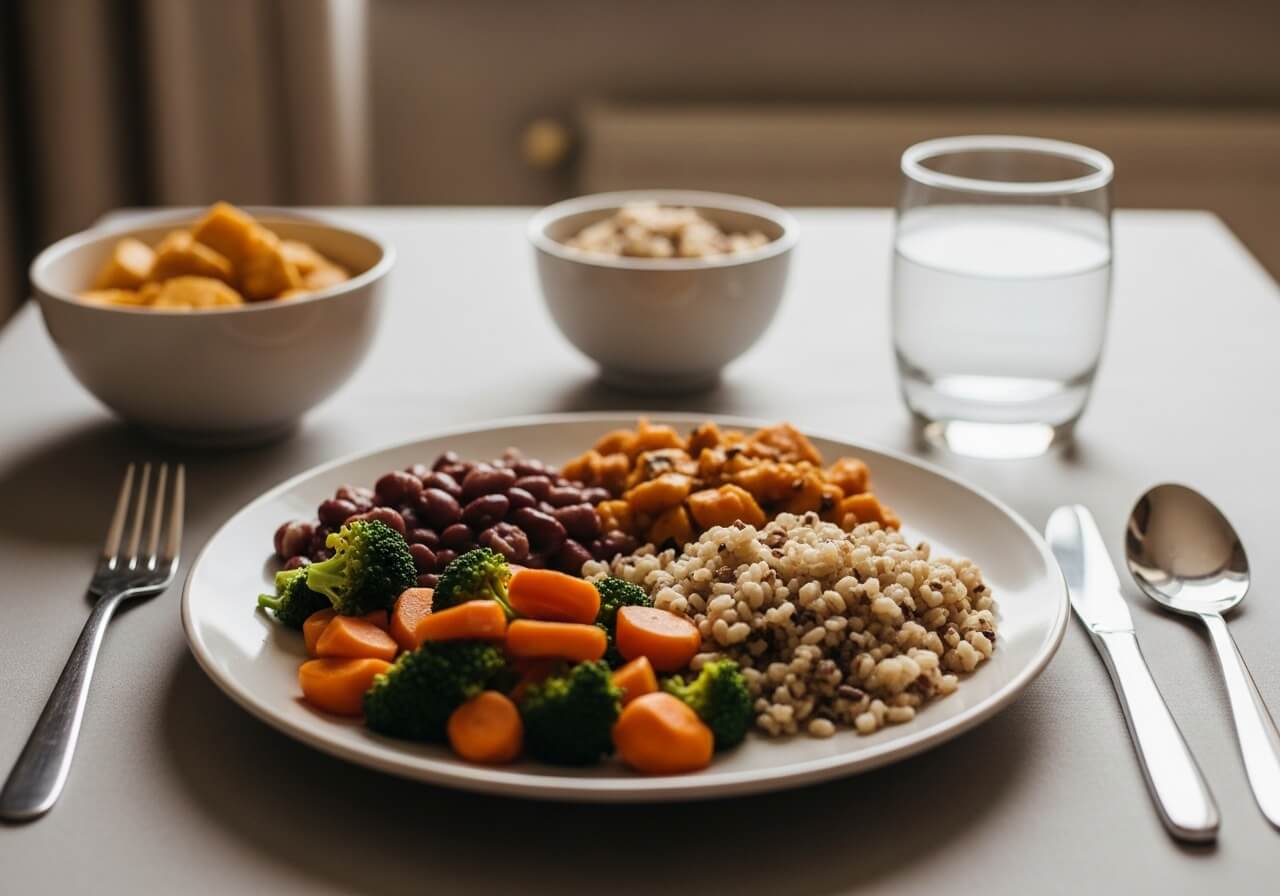
Fiber moves through your digestive tract without being fully broken down, which means it contributes to stool bulk and helps keep material moving through your gut. Unlike simple carbohydrates, fiber doesn’t spike blood sugar quickly, which supports more stable energy and helps you feel full longer after eating.
How soluble and insoluble fiber differ in your gut
The two main types of fiber work differently in digestion. Soluble fiber dissolves in water and forms a gel-like substance in your gut, which can slow digestion and help moderate how quickly glucose enters your bloodstream. You’ll find it in oats, beans, apples, and citrus fruits.
Insoluble fiber doesn’t dissolve. Instead, it adds bulk to stool and helps material move through your intestines more efficiently. Whole wheat, brown rice, nuts, and many vegetables are good sources. Most high-fiber foods contain both types in varying amounts.
Why fiber-rich foods naturally reduce between-meal cravings
Foods high in fiber take longer to chew and digest, which can help you feel satisfied sooner and stay full longer. This effect isn’t magic—it’s mechanical. Fiber adds volume to meals without adding many calories, and the slower digestion helps moderate hunger signals between meals. That said, fiber alone won’t eliminate cravings, especially if meals lack adequate protein or fat.
Where to find fiber for weight loss in common grocery items
Adults benefit from roughly 25 grams of fiber daily for women and 38 grams for men, but most people fall short. The best high-fiber foods are whole plant foods you likely pass in the grocery store regularly.
Beans, lentils, and legumes vs. whole grains for daily fiber
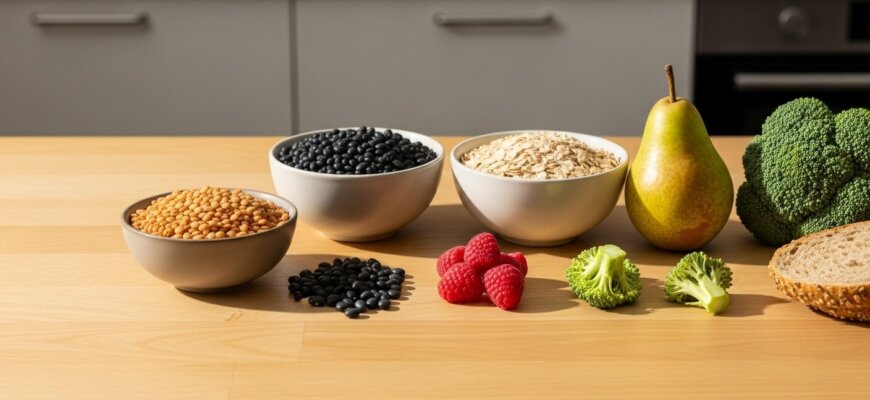
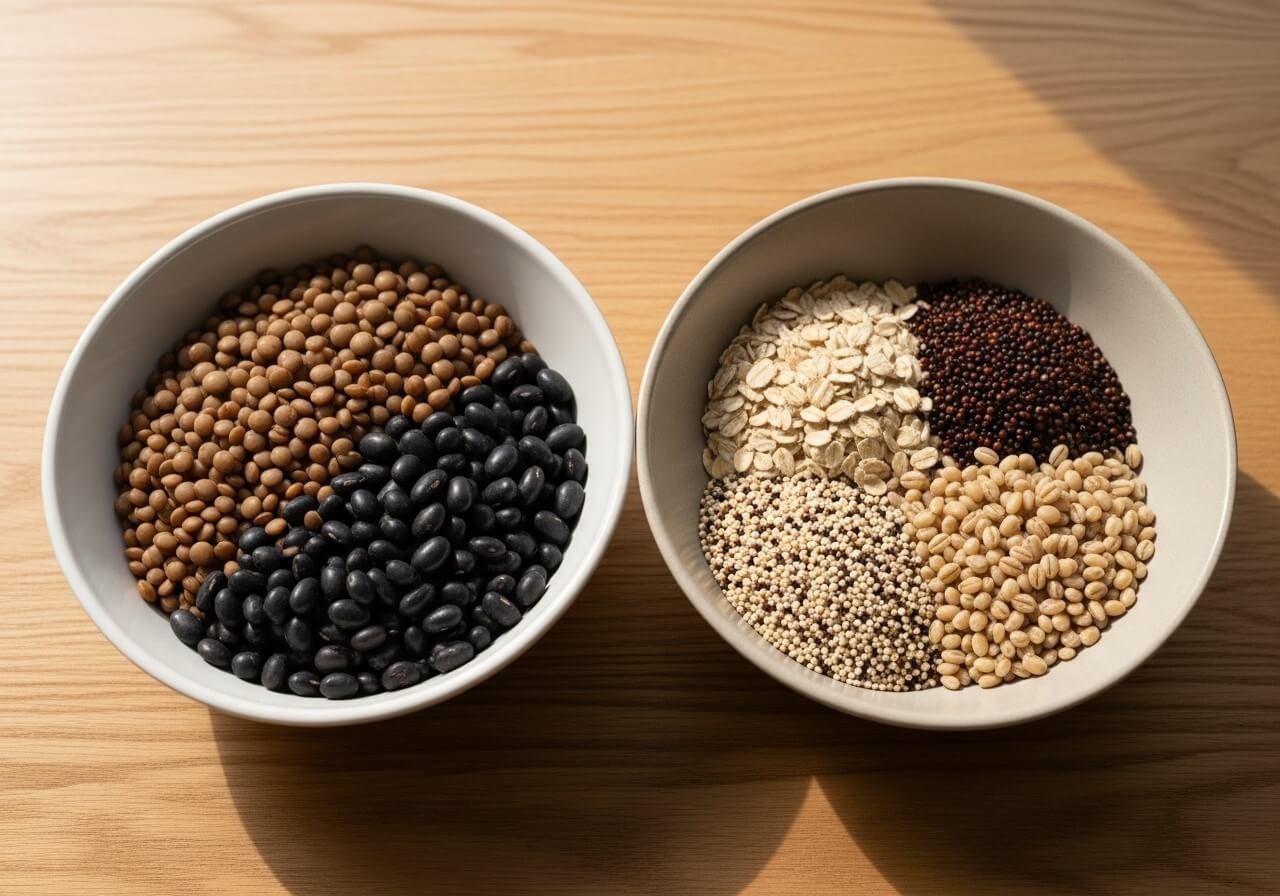
Legumes are among the most fiber-dense foods available. A half-cup of cooked lentils provides about 8 grams of fiber, while the same amount of black beans delivers around 7.5 grams. Chickpeas, split peas, and kidney beans follow closely. Because they’re also high in protein, legumes work well as the base of a meal rather than just a side.
Whole grains contribute steady fiber throughout the day. One cup of cooked oatmeal offers about 4 grams, a slice of whole-wheat bread provides roughly 2 grams, and a cup of cooked brown rice adds about 3.5 grams. Quinoa and barley are also solid choices. The key difference is that whole grains keep the bran and germ intact, while refined grains strip most fiber away.
High-fiber legumes and grains:
- Lentils (cooked, 1/2 cup): ~8g fiber
- Black beans (cooked, 1/2 cup): ~7.5g fiber
- Chickpeas (cooked, 1/2 cup): ~6g fiber
- Split peas (cooked, 1/2 cup): ~8g fiber
- Oatmeal (cooked, 1 cup): ~4g fiber
- Quinoa (cooked, 1 cup): ~5g fiber
- Whole-wheat pasta (cooked, 1 cup): ~6g fiber
- Barley (cooked, 1 cup): ~6g fiber
Fruits and vegetables with the highest fiber per serving
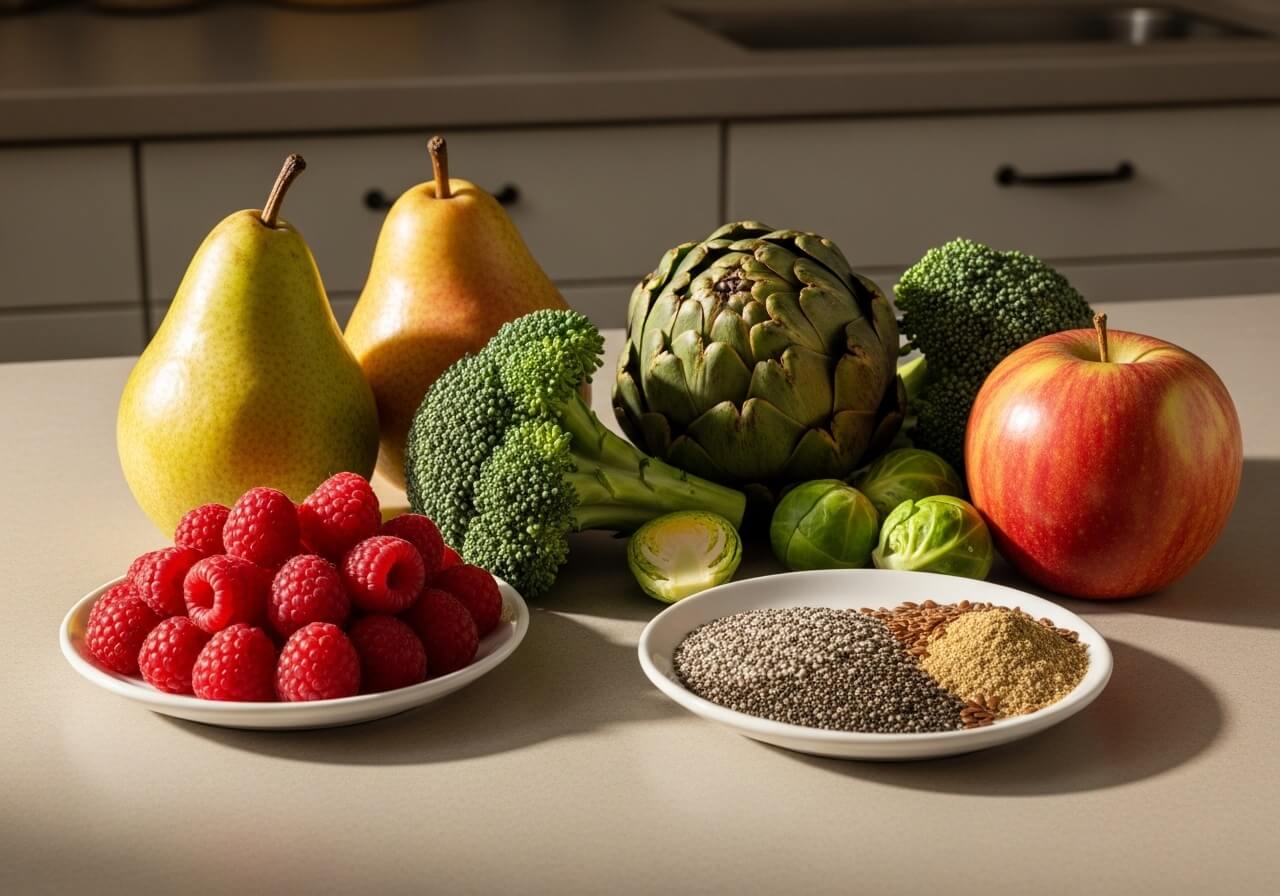
Fruits and vegetables vary widely in fiber content. Berries, pears, and apples with skin are among the best fruit sources. A medium pear offers about 5.5 grams of fiber, a cup of raspberries provides 8 grams, and a medium apple with skin delivers around 4.5 grams. Dried fruits like prunes and figs are concentrated sources, but they also pack more sugar and calories per serving.
For vegetables, focus on options like artichokes, broccoli, Brussels sprouts, carrots, and sweet potatoes. A medium artichoke contains roughly 7 grams of fiber, while a cup of cooked broccoli provides about 5 grams. Leafy greens contribute smaller amounts per serving but add up when you eat them regularly.
High-fiber fruits:
- Raspberries (1 cup): ~8g fiber
- Pear with skin (1 medium): ~5.5g fiber
- Apple with skin (1 medium): ~4.5g fiber
- Blackberries (1 cup): ~7.5g fiber
- Avocado (1/2 medium): ~5g fiber
- Prunes (1/4 cup): ~3g fiber
- Banana (1 medium): ~3g fiber
High-fiber vegetables:
- Artichoke (1 medium, cooked): ~7g fiber
- Brussels sprouts (1 cup, cooked): ~4g fiber
- Broccoli (1 cup, cooked): ~5g fiber
- Sweet potato with skin (1 medium, baked): ~4g fiber
- Carrots (1 cup, raw): ~3.5g fiber
- Spinach (1 cup, cooked): ~4g fiber
- Kale (1 cup, cooked): ~2.5g fiber
Other fiber-rich options:
- Chia seeds (1 oz): ~10g fiber
- Almonds (1 oz): ~3.5g fiber
- Flaxseeds (2 tbsp, ground): ~4g fiber
- Popcorn (3 cups, air-popped): ~3.5g fiber
What happens when you eat too much fiber too quickly
Adding fiber gradually matters more than most people realize. Your gut bacteria need time to adjust to higher fiber intake, and your digestive system needs adequate fluid to process the increased bulk.
Signs your fiber increase is moving too fast
If you jump from 10 grams of fiber daily to 35 grams overnight, you’ll likely experience bloating, gas, cramping, or even constipation. These symptoms don’t mean fiber is bad for you—they mean you’ve asked your digestive system to adapt faster than it can manage.
A more practical approach is to add one high-fiber food every few days and monitor how you feel. For example, start with a bowl of oatmeal at breakfast for a week, then add a serving of black beans to lunch the following week. This gradual increase gives your gut bacteria time to ramp up production of the enzymes needed to process fiber efficiently.
How to drink enough water with high-fiber meals
Fiber absorbs water as it moves through your digestive tract. If you increase fiber without increasing fluid intake, you may end up constipated rather than regular. There’s no universal water formula, but a reasonable guideline is to drink a glass of water with each high-fiber meal and sip water consistently throughout the day.
If you’re adding particularly absorbent fibers like chia seeds, flaxseeds, or wheat bran, pay extra attention to hydration. These foods can soak up significant amounts of liquid in your gut.
Frequently Asked Questions
Can increasing fiber really help with weight loss?
Fiber can support weight management, but it’s not a standalone solution. High-fiber foods tend to be more filling per calorie, which may help you eat less overall without feeling deprived. Studies suggest that people who eat more fiber-rich foods often have an easier time maintaining a healthy weight, but this effect works best when fiber replaces lower-fiber, more calorie-dense foods rather than simply adding to existing intake.
Which fiber-rich foods cause the least gas and bloating?
Individual tolerance varies, but some fiber sources tend to produce less gas than others. Cooked vegetables, peeled fruits, oats, and white rice with added vegetables generally cause fewer digestive symptoms than raw cruciferous vegetables, beans, or bran cereals. If legumes cause discomfort, try rinsing canned beans thoroughly, starting with smaller portions, or using digestive enzymes designed for complex carbohydrates.
How much fiber should adults eat daily for digestive health?
The Dietary Guidelines for Americans recommend about 25 grams daily for adult women and 38 grams for adult men. Most Americans consume only about 15 grams per day. Rather than fixating on the exact number, focus on gradually replacing refined grains with whole grains, adding a serving of legumes several times per week, and including fruits or vegetables at most meals.
Conclusion
Building up your fiber intake with everyday foods like beans, whole grains, fruits, and vegetables can support steadier digestion and help you feel satisfied longer between meals. Start with one or two changes rather than overhauling your entire diet at once, and give your digestive system time to adjust. Small, consistent improvements tend to stick better than dramatic shifts that cause discomfort.