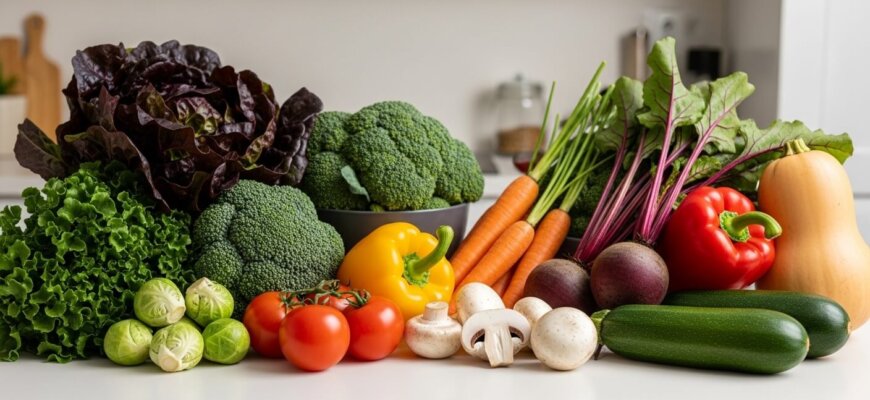
Some vegetables deliver far more vitamins, minerals, and plant compounds per calorie than others. This guide highlights 30 standout options—from watercress and spinach to beets and butternut squash—and shows you exactly how to prepare them so you get the most benefit on your plate. Whether you’re rebuilding your grocery list or just trying to cook smarter, knowing which options pack the biggest nutritional punch makes healthy eating simpler.
- Why These Vegetables Deserve Regular Rotation
- The vitamins and minerals you get most from plants
- How low-calorie foods can still be nutrition powerhouses
- Cooking Methods That Preserve Maximum Vegetable Nutrition
- Steaming versus roasting: Which vegetables handle heat better
- Quick prep tricks that save time while boosting flavor
- When Your Vegetable Choices Need Adjustment
- Which vegetables lose nutrients during storage and how to prevent it
- Why cooking time matters more than cooking method
- FAQ
- What makes a vegetable nutrient-dense compared to regular vegetables?
- How can I prepare vegetables to keep maximum nutrition during cooking?
- Which vegetables should I prioritize for the biggest health impact?
- Conclusion
Why These Vegetables Deserve Regular Rotation
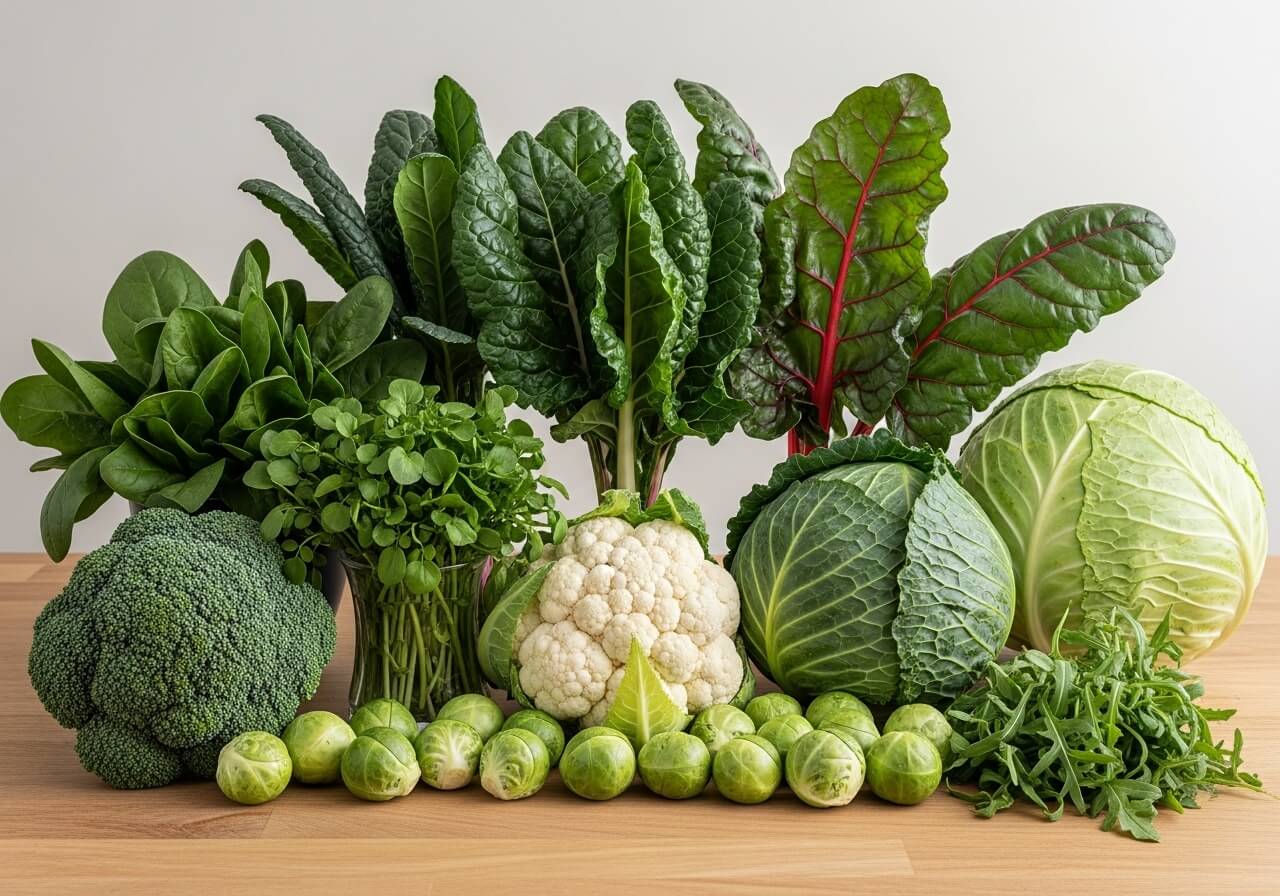
The 30 top vegetables for health listed here include watercress, spinach, kale, Swiss chard, collard greens, arugula, bok choy, broccoli, Brussels sprouts, cabbage, cauliflower, radishes, turnip greens, kohlrabi, carrots, sweet potatoes, butternut squash, pumpkin, red bell peppers, tomatoes, garlic, onions, leeks, scallions, asparagus, beets, artichokes, okra, mushrooms, and zucchini. Most belong to two families: dark leafy greens and cruciferous vegetables. These foods provide high concentrations of vitamins and minerals relative to their calorie content. No single entry covers every nutrient, which is why rotating them matters more than declaring one the winner.
The vitamins and minerals you get most from plants
Plants excel at delivering folate, vitamin K, vitamin C, potassium, magnesium, and fiber. Dark leafy greens like spinach and collards carry exceptional amounts of vitamin K and folate. Cruciferous options such as broccoli and Brussels sprouts contribute vitamin C and sulfur-containing plant compounds. Orange and red vegetables including carrots, red peppers, and tomatoes supply carotenoids that the body can convert to vitamin A. Because these nutrients perform different jobs, a plate that mixes colors and families covers more ground than one that relies on a single vegetable repeated daily.
How low-calorie foods can still be nutrition powerhouses
Nutrient density measures how much nutrition a food delivers per calorie. A cup of cooked spinach or raw watercress provides a high proportion of daily vitamins for very few calories. This means you can eat satisfying portions of these nutrient-dense vegetables without energy overload. It also makes portion control easier, since bulky, fiber-rich produce tends to fill space on the plate.
Cooking Methods That Preserve Maximum Vegetable Nutrition
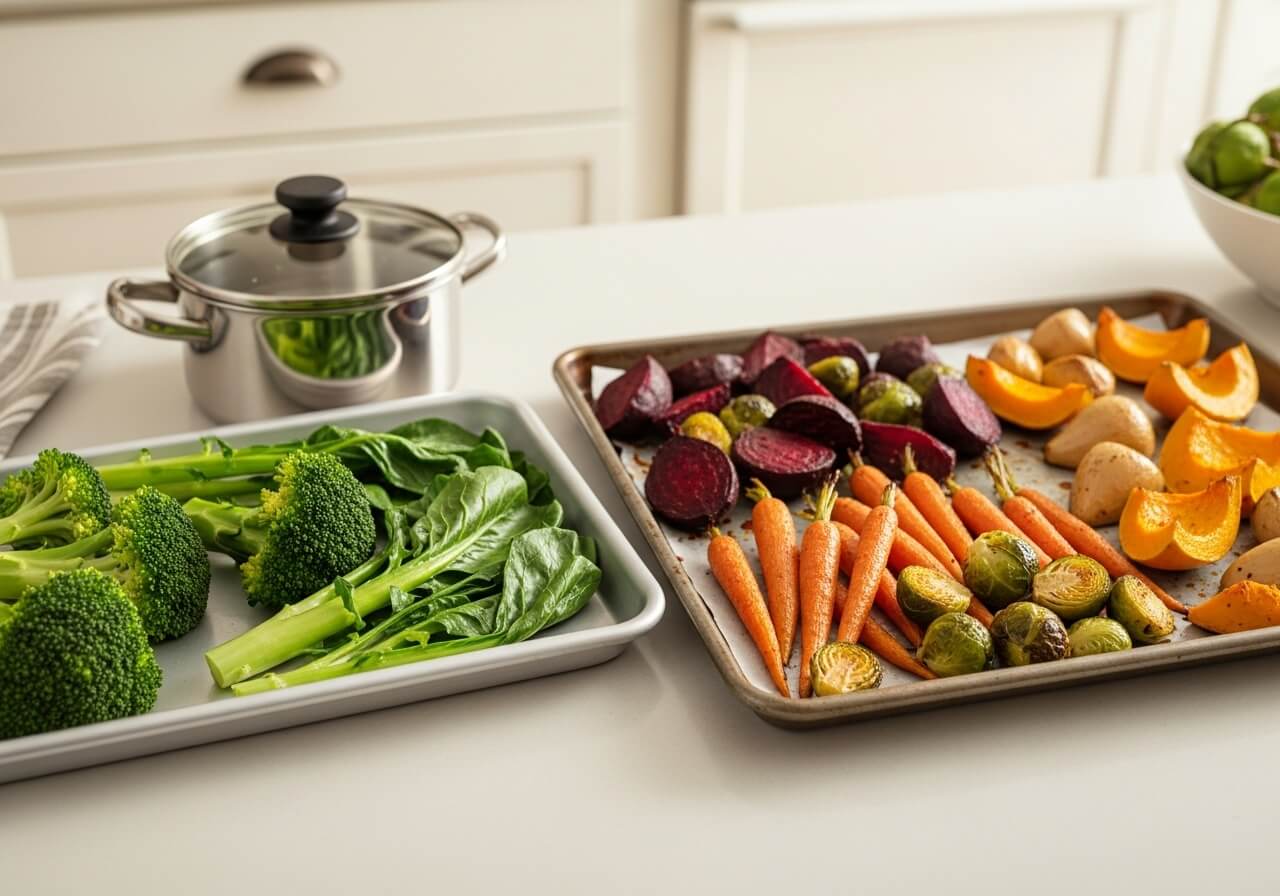
How you cook a vegetable changes what your body can extract from it. The right method can protect water-sensitive vitamins, improve access to fat-soluble compounds, and turn a tough stalk into something you actually want to eat.
Steaming versus roasting: Which vegetables handle heat better
Steaming uses minimal water and short heat exposure, so it protects vitamin C and other water-soluble compounds. Broccoli, cauliflower, and leafy greens usually need only three to seven minutes to become tender without becoming mushy.
Roasting suits dense, low-moisture vegetables like carrots, beets, winter squash, and Brussels sprouts. Dry heat softens cell walls and concentrates sugars, improving texture. It also boosts access to lycopene in tomatoes and some carotenoids in orange vegetables, though prolonged high heat can degrade vitamin C.
As a decision rule: choose steaming for green, water-rich vegetables and roasting for firm, starchy, or red-orange ones.
Quick prep tricks that save time while boosting flavor
Frozen spinach, broccoli, or mixed vegetables are sound options when fresh supply is unpredictable, and they require little more than a quick steam or sauté. For fresh produce, roasting a full sheet pan of zucchini, onions, and peppers on Sunday gives you ready-to-eat components for multiple meals.
Adding a splash of lemon juice or vinegar after cooking replaces lost brightness without extra salt, and finishing cooked greens with a small amount of olive oil helps your body absorb fat-soluble vitamins like A, K, and E. If time is short, uniform cut size will reduce cooking time and help nutrients cook more evenly.
When Your Vegetable Choices Need Adjustment
Even the best vegetable selection can underperform if storage or cooking go wrong. These pitfalls are easy to fix once you know what to watch for.
Which vegetables lose nutrients during storage and how to prevent it
Vitamin C begins to decline after harvest, so peppers, leafy greens, broccoli, and asparagus lose potency the longer they sit in your crisper. Root vegetables like carrots and beets hold up better in cold storage, but their greens—if still attached—should be removed promptly so the root doesn’t continue feeding the foliage.
Store tender vegetables in breathable bags in the high-humidity drawer and aim to use them within three to five days. For items you can’t use quickly, frozen equivalents stop nutrient decline at peak ripeness and serve as a reliable backup.
Why cooking time matters more than cooking method
People often debate steaming versus boiling, but the real danger is overcooking. A broccoli floret boiled for two minutes may retain more nutrients than one steamed for fifteen. The practical standard is to cook vegetables until they’re just tender enough to eat comfortably, not until they fall apart.
Dense roots may need twenty to thirty minutes of roasting, and their structure holds up fine. But for leafy greens or green beans, aim for two to four minutes of active cooking. Texture is a reliable signal: once a vegetable turns army green and smells sulfurous, nutrient breakdown has accelerated.
FAQ
What makes a vegetable nutrient-dense compared to regular vegetables?
A nutrient-dense vegetable carries a high concentration of vitamins, minerals, and beneficial plant compounds relative to its calorie content. For every calorie you consume, you receive a larger package of folate, vitamin K, potassium, or antioxidants. Less dense options may still be wholesome, but they don’t deliver the same micronutrient volume per bite.
How can I prepare vegetables to keep maximum nutrition during cooking?
Limit water contact, keep heat exposure brief, and serve them promptly. Use steaming or sautéing for tender greens, and reserve roasting for dense varieties where dry heat improves both texture and access to certain antioxidants. Stopping cooking while vegetables still have a slight firmness prevents excess breakdown, and adding a source of healthy fat helps your body absorb fat-soluble vitamins.
Which vegetables should I prioritize for the biggest health impact?
Prioritize dark leafy greens and cruciferous vegetables most often, because they cover a broad spectrum of vitamins and minerals per calorie. Beyond that, rotate at least three colors—green, orange or red, and white or purple—across your weekly meals. If you currently eat few vegetables, start with whatever preparation you enjoy. Enjoyment drives repetition, and repetition drives impact more than forcing yourself to eat a vegetable you dislike.
Conclusion
Adding these 30 nutrient-dense vegetables to your meals, prepared the right way, gives your body solid nutrition without extra calories or complicated planning. Start with one or two new picks this week, prepare them using the method that best fits their texture, and build from there. Even modest changes to your vegetable choices and cooking habits compound quickly into a stronger, simpler approach to eating well.