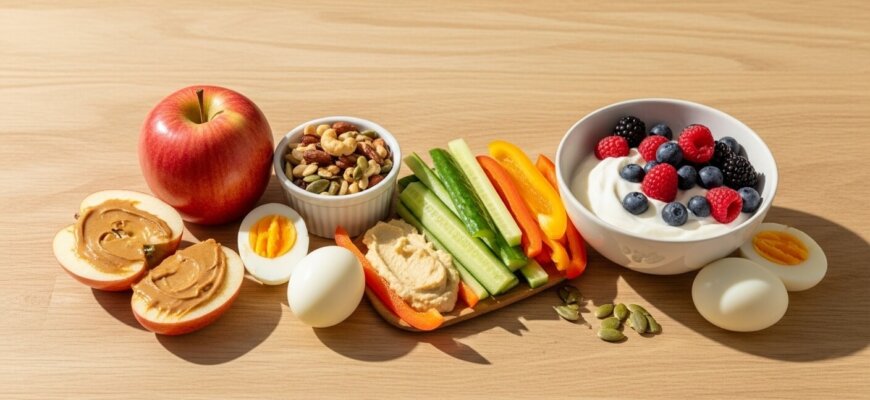
Moving beyond processed protein bars and shakes opens access to healthy snacks nutrition that delivers more than isolated protein. Nutrient-dense snacks are defined by high levels of essential vitamins, minerals, and fiber per calorie—not just protein content. Whole food options like fruits paired with nuts provide sustained energy by combining fiber with healthy fats, which slows digestion and may help prevent blood sugar spikes. This article explores practical alternatives that fit easily into daily routines.
- Fruit and Nut Power Combos
- Pairing for Fiber and Satisfaction
- Quick Preparation Ideas
- Savory Vegetable Bites
- Crunchy Garden Options
- Dip Companions for Extra Flavor
- Dairy and Alternative Swaps
- Unsweetened Yogurt and Kefir Benefits
- Plant-Based Milk and Seed Puddings
- Egg-Based Mini Meals
- Hard-Boiled Egg Convenience
- Mini Frittatas and Egg Muffins
- Smart Grain and Seed Snacks
- Whole-Grain Crackers with Toppings
- Seed-Based Energy Bites
- Crafting Your Nutrient-Dense Snacks Strategy
- Weekly Prep for Easy Access
- Balancing Macros for Between Meal Nutrition
- FAQ
- What makes a snack nutrient-dense?
- How much protein should my snacks contain?
- Can whole food snacks help with weight management?
- Conclusion
Fruit and Nut Power Combos
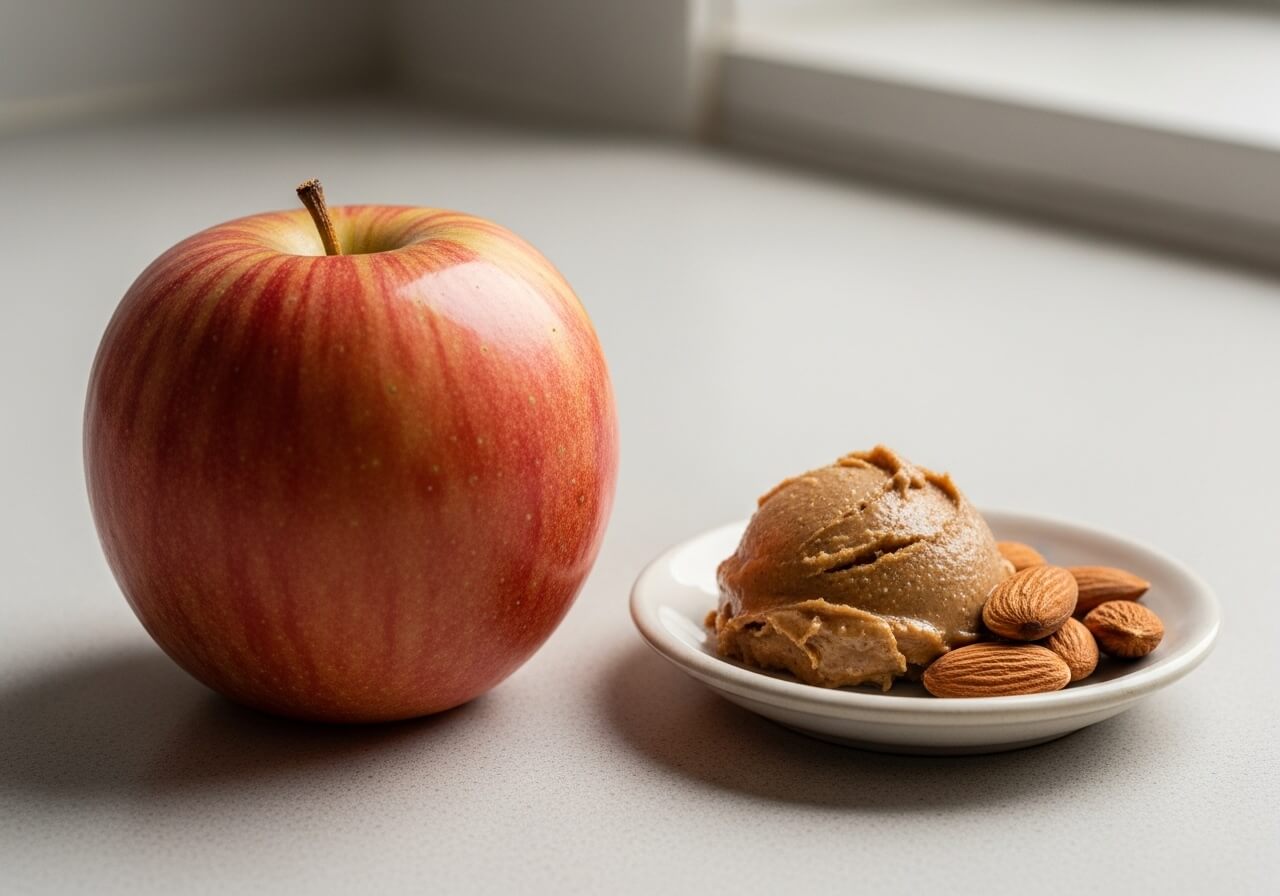
An apple with two tablespoons of almond butter delivers fiber from the fruit and healthy monounsaturated fat from the nuts. This combination works because the fat and protein may slow how quickly your body absorbs the fruit’s natural sugars.
Pairing for Fiber and Satisfaction
Choose fruits with edible skin or seeds—berries, pears, and apples offer more fiber than peeled options. Pair these with nuts, seeds, or nut butters. A person replacing a sugary protein bar with this kind of combination may experience slower hunger return and better energy stability during work. The fiber content in the fruit (typically 3–5 grams) combined with the satiating effect of fat means you’re less likely to feel hungry again after 30 minutes.
Quick Preparation Ideas
Keep a small container of mixed nuts or seeds at your desk. Buy whole fruits that don’t require refrigeration—apples, oranges, bananas. When hunger hits, assemble the snack in under two minutes. Dried fruit pairs equally well with nuts if fresh fruit isn’t available, though use a smaller portion since dried fruit is more calorie-dense. Choose varieties without added sugar.
Savory Vegetable Bites
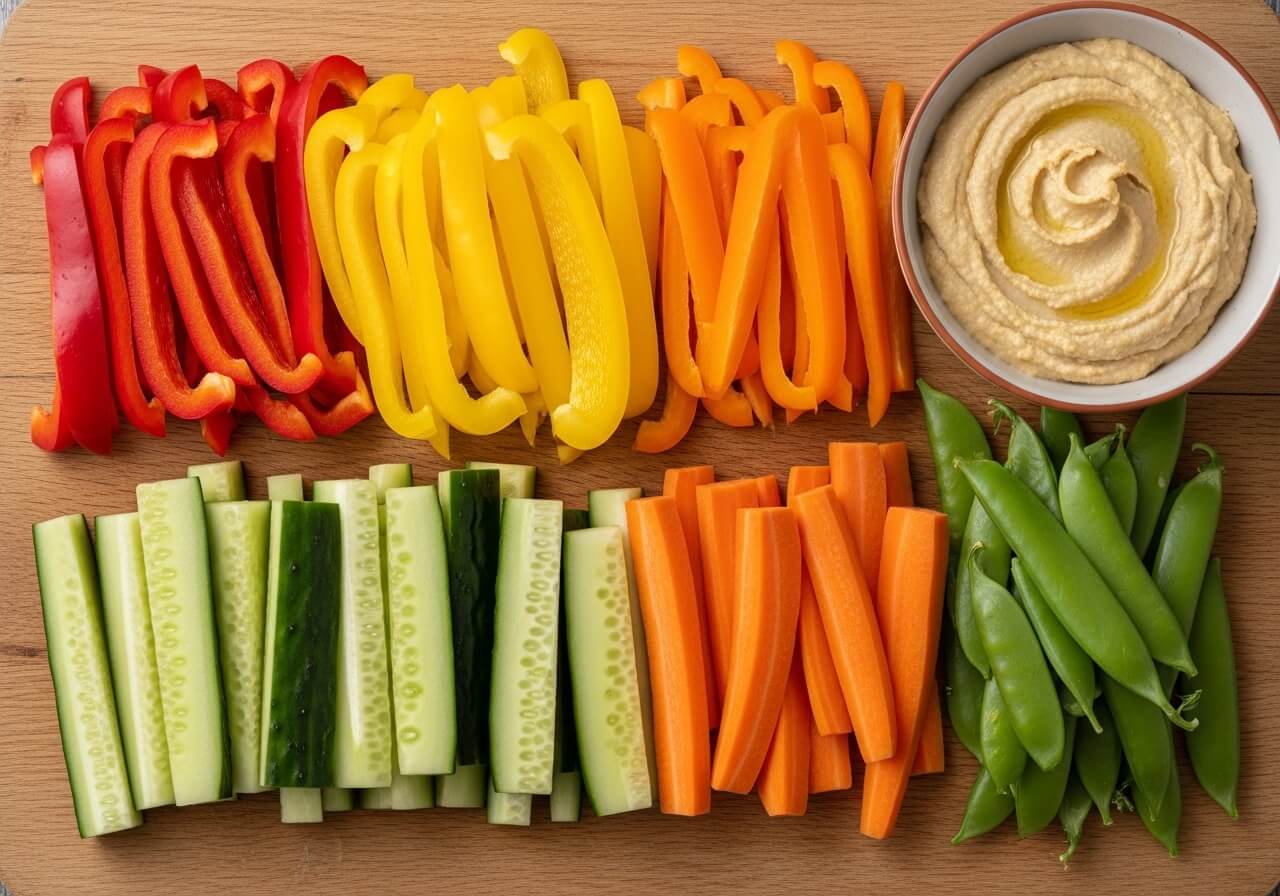
Vegetables are often overlooked for snacking despite offering nutrients without the blood sugar response of sweet options. The key is pairing them with something to create a satisfying snack.
Crunchy Garden Options
Bell peppers, snap peas, carrots, and cucumber slices are portable and require no preparation. The crunch itself provides sensory satisfaction that softer snacks don’t. These vegetables are also low in calories while being high in water and fiber, so you can eat a larger volume. Bell peppers contain more vitamin C than many citrus fruits.
Dip Companions for Extra Flavor
Pairing vegetables with hummus, Greek yogurt-based dips, or tahini transforms them nutritionally. Hummus adds both protein and healthy fats from chickpeas and olive oil. Two tablespoons with a cup of mixed vegetables creates a snack with roughly 5 grams of protein and enough fiber to help sustain appetite between meals. Vegetables alone often don’t provide enough satisfaction, which is why adding a protein or fat source makes the difference.
Dairy and Alternative Swaps
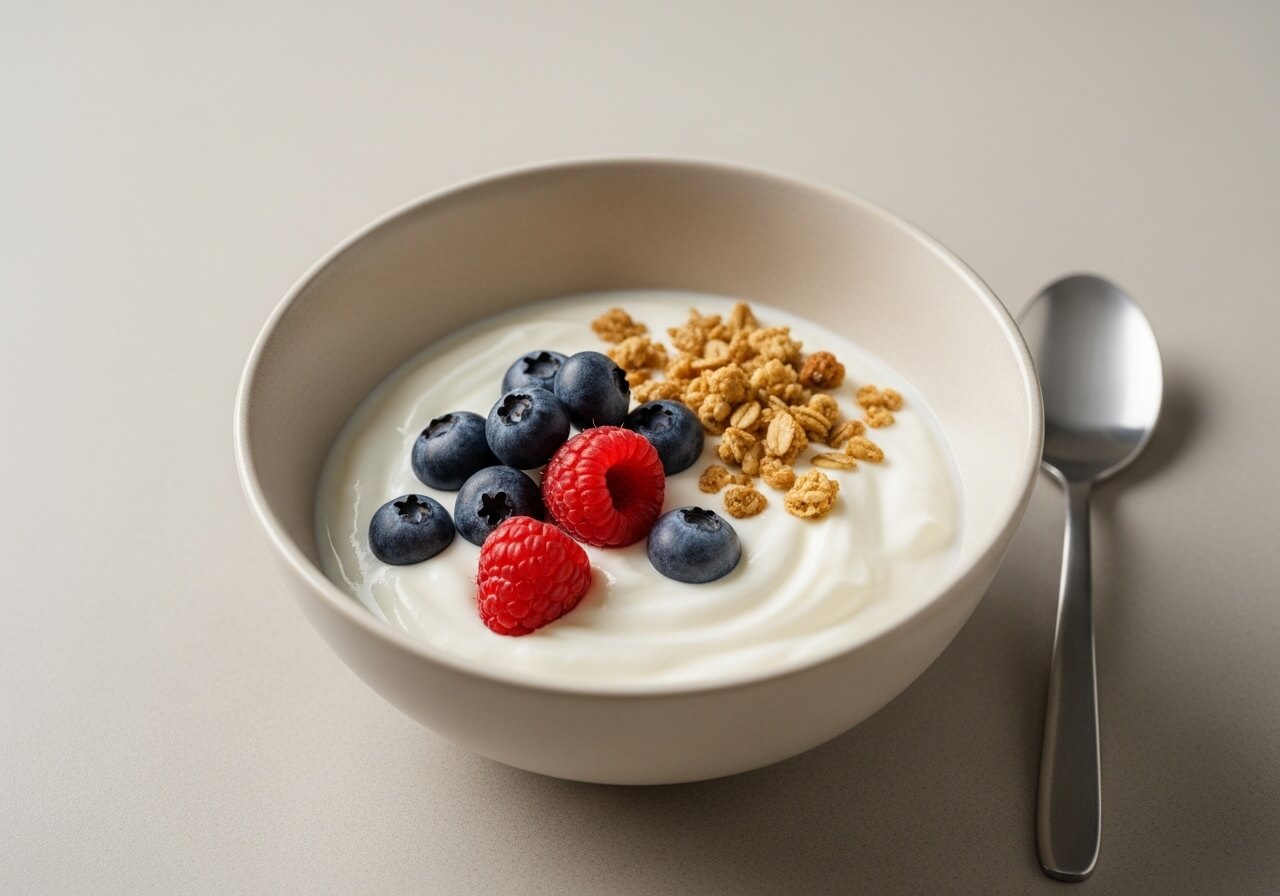
Dairy and plant-based alternatives offer convenience when whole food preparation isn’t practical. Choose unsweetened versions to control added sugars.
Unsweetened Yogurt and Kefir Benefits
Plain Greek yogurt contains 15–20 grams of protein per serving without added sugar. A single serving with fresh berries and a small handful of granola creates a complete snack within minutes. Kefir, a fermented dairy drink, offers similar protein with the added benefit of live probiotic cultures. The fermentation process may make kefir easier to digest for some people compared to regular milk. Unlike flavored yogurts that can contain as much sugar as dessert, unsweetened versions give you control over sweetness through your own toppings.
Plant-Based Milk and Seed Puddings
A chia seed pudding made with unsweetened almond milk, chia seeds, and vanilla extract requires only overnight refrigeration. This offers complete protein, omega-3 fatty acids, and fiber. Chia seeds absorb liquid and create a satisfying texture that feels substantial. The advantage over commercial protein puddings is knowing exactly what’s in it—no gums, thickeners, or artificial sweeteners unless you choose to add them.
Egg-Based Mini Meals
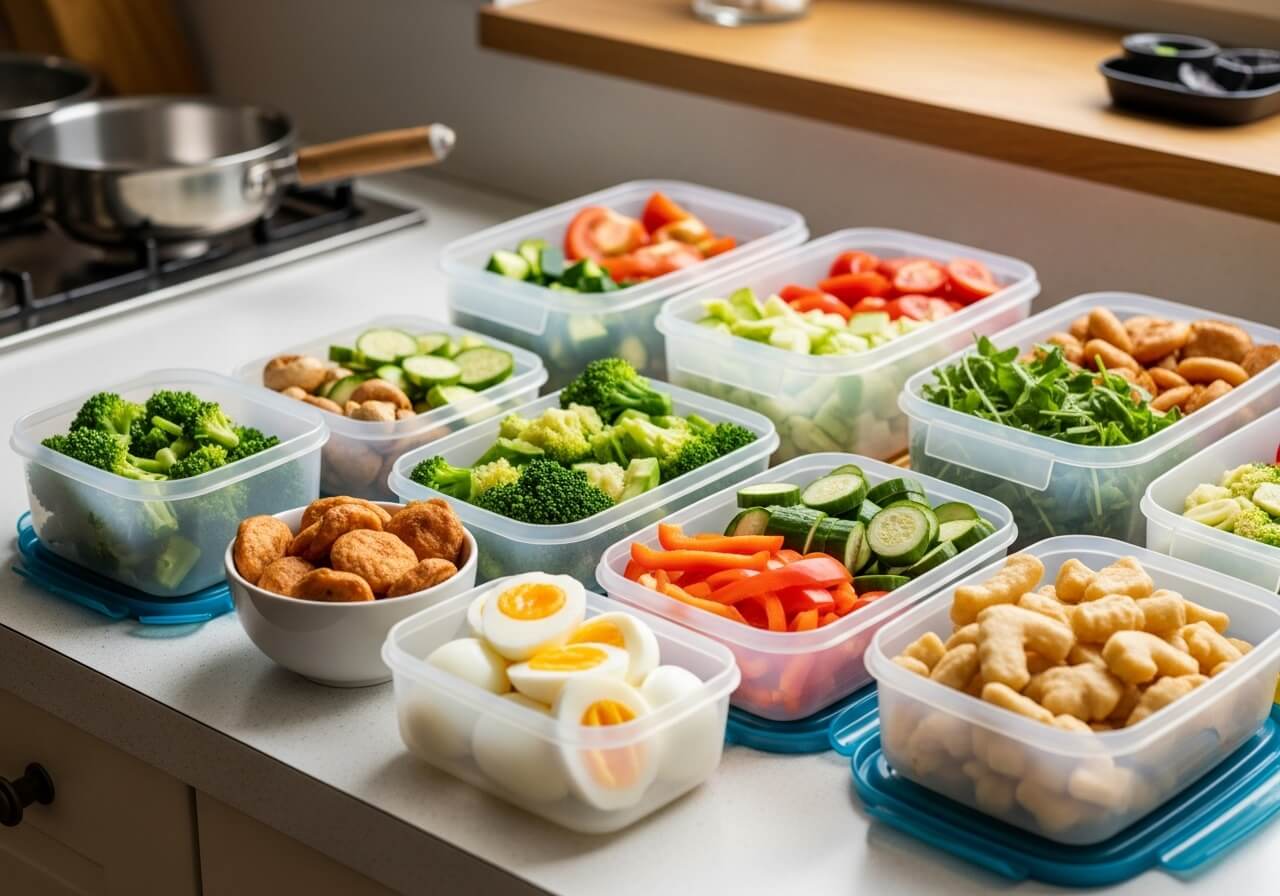
Eggs provide complete protein with all nine essential amino acids, making them useful for between-meal nutrition despite being underutilized as snack foods.
Hard-Boiled Egg Convenience
A dozen hard-boiled eggs prepared once gives you six days of grab-and-go snacking. Each egg contains about 6 grams of protein and important micronutrients like choline. Pair eggs with whole-grain crackers, a piece of fruit, or raw vegetables to add variety while keeping preparation time at zero.
Mini Frittatas and Egg Muffins
Egg muffins made by whisking eggs with diced vegetables, cheese, and herbs, then baking them in a muffin tin, freeze well and reheat in minutes. Each muffin contains roughly 8 grams of protein plus micronutrients from whatever vegetables you include. Preparation takes about 20 minutes total for 12 individual portions.
Smart Grain and Seed Snacks
Whole grains and seeds provide energy through fiber and complex carbohydrates. The key is pairing them with protein or fat for sustained satisfaction.
Whole-Grain Crackers with Toppings
A small serving of whole-grain crackers (about 5–6 crackers) topped with almond butter, cheese, or hummus creates a balanced snack. The whole grain provides fiber and B vitamins, while the topping adds protein and fat. This differs from eating crackers alone, which may cause hunger to return quickly. If your carbohydrate snack isn’t paired with fat or protein, it’s likely not substantial enough.
Seed-Based Energy Bites
Mix seeds like pumpkin, sunflower, or sesame with a small amount of honey or dates as a binder, coconut oil, and vanilla. Form into balls and refrigerate. These provide protein, healthy fats, fiber, and minerals like magnesium and zinc. Unlike commercial energy balls that often contain added sugars, homemade versions let you control sweetness. The density means eating one or two typically feels satisfying.
Crafting Your Nutrient-Dense Snacks Strategy
Having options isn’t enough. The real difference comes from removing friction so that whole food snacks become the default choice.
Weekly Prep for Easy Access
Spend 30 minutes once a week washing, chopping, and storing vegetables in containers. Cook a batch of eggs. Toast some seeds if you’re using them. When hunger hits midweek, the quickest option becomes the healthy one. This removes decision fatigue—the prepared food is already there.
Balancing Macros for Between Meal Nutrition
Think of snacks as having three components: carbohydrate for quick energy, protein for satiety, and fat for sustained fullness. Not every snack needs all three, but most everyday snacks benefit from this balance. An apple with almond butter, Greek yogurt with berries and granola, or nuts with cheese all provide this combination. This approach helps ensure that protein is supporting sustained satiety rather than just adding calories without fiber or healthy fats.
FAQ
What makes a snack nutrient-dense?
A nutrient-dense snack delivers high levels of vitamins, minerals, and fiber relative to its calorie content. A snack with 15 grams of protein but only 1 gram of fiber and added sugars provides less overall nutrition than one with 10 grams of protein, 5 grams of fiber, and whole food ingredients. The density determines how well the snack supports energy, appetite control, and daily micronutrient intake.
How much protein should my snacks contain?
Individual protein needs vary based on activity level, body weight, and fitness goals. For most people, 5–10 grams of protein may be sufficient for a between-meal snack. Active individuals or those doing resistance training may benefit from 12–15 grams. Rather than fixating on a specific number, notice how long you stay satisfied after eating. If you’re hungry 30 minutes later, your snack likely needs more protein or fat. If you’re comfortably full for 2–3 hours, your snack worked.
Can whole food snacks help with weight management?
Regular consumption of whole food snacks between meals may help maintain satiety and support weight management compared to some processed alternatives. Whole foods with fiber and fat may create longer-lasting fullness, which can mean fewer total calories consumed throughout the day. This isn’t because whole foods have special properties, but because better appetite control can make overall eating patterns more sustainable. When you’re less hungry between meals, you may be less likely to overeat at the next meal.
Conclusion
Choosing nutrient-dense snacks from whole foods offers practical benefits for energy stability and appetite control that many commercial products don’t provide. Start with one prepared option—hard-boiled eggs or fruit with nuts—to build momentum. The goal isn’t perfection, but making whole food snacks the convenient default choice rather than an afterthought.