
Building a personalized nutrition plan by body type starts with understanding how your body tends to store and use energy. The concept of body types—ectomorph, mesomorph, and endomorph—has roots in historical anthropological research. While major medical bodies don’t recognize somatotypes as distinct biological determinants for nutrition, these categories serve as a practical starting point for tailoring your approach. The real value lies in using your body’s characteristics as one factor among many—including your activity level, goals, and individual response to different foods—to build a plan that fits your life.
- Identifying Your Body Type: Ectomorph, Mesomorph, or Endomorph
- Key characteristics of each body type
- A simple self-assessment to find your fit
- Customizing Your Macronutrient Ratios by Body Type
- Recommended macro splits for ectomorph nutrition plans
- Adjusting body type macros for mesomorph nutrition and endomorph eating plans
- Crafting Your Daily Meal Structure and Food Choices
- Meal timing and frequency considerations for different body types
- High-impact food selections for optimal results
- Setting Realistic Calorie Targets for Your Goals
- Calculating baseline calories for fat loss, maintenance, or muscle gain
- Adjusting intake for activity level and training intensity
- Adapting Your Plan and Avoiding Common Pitfalls
- Recognizing signs your plan needs modification
- Common mistakes when following a nutrition plan by body type
- Frequently Asked Questions
- What are the main dietary differences between an ectomorph and an endomorph?
- Can my body type change over time, and if so, how does that affect my diet?
- Should I count calories or just focus on macro ratios for my body type?
- Conclusion
Identifying Your Body Type: Ectomorph, Mesomorph, or Endomorph

Understanding your somatotype gives you a useful reference point for initial nutrition decisions. Body type describes general physical characteristics and how your body tends to respond to diet and training, though it doesn’t determine your metabolism or guarantee success with any particular eating approach.
Key characteristics of each body type
An ectomorph typically has a lean, linear frame with narrow shoulders and hips, lower body fat storage, and difficulty gaining weight or muscle. These individuals often feel hungry on standard portions and struggle to eat enough calories.
A mesomorph generally carries muscle naturally, has a rectangular or athletic build, and responds relatively quickly to both strength training and dietary changes. This body type often finds moderate to high activity levels sustainable.
An endomorph tends to have a rounder build and carries body fat more easily, especially around the midsection. These individuals often feel satisfied on smaller portions but may need more intentional activity and food choices to manage their weight.
A simple self-assessment to find your fit
Start with bone structure: measure your wrist circumference and compare it to your height. A smaller wrist-to-height ratio suggests ectomorph characteristics. Next, consider your history with training: How easily do you gain muscle when strength training? How readily do you gain fat when eating more? Finally, notice your natural hunger patterns. Do you feel hungry frequently and need regular eating? Do you feel full quickly and prefer smaller, less frequent meals?
Many people are a blend—for example, a meso-endomorph who gains muscle easily but also carries fat readily. Use whichever characteristics describe you most accurately, and adjust as you learn your body’s actual response to food and activity.
Customizing Your Macronutrient Ratios by Body Type
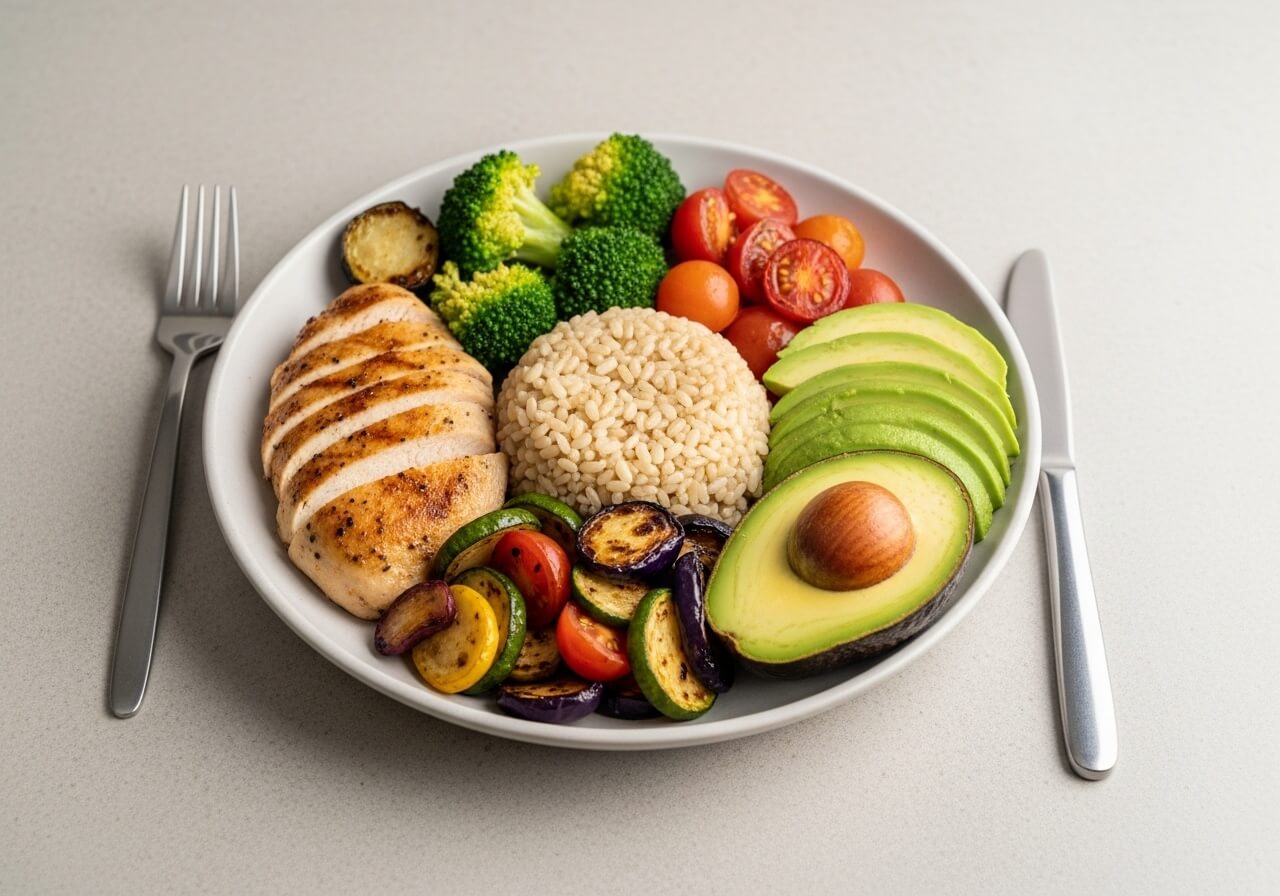
Rather than following a generic macro split based solely on your body type, calculate your needs using actual evidence. Active individuals across all body types generally benefit from protein intake between 1.2 to 2.2 grams per kilogram of body weight, depending on whether you’re focusing on muscle gain, maintenance, or fat loss. The variation in carbohydrate and fat ratios should be based on your energy needs, activity intensity, and how your body performs—not on your somatotype alone.
Recommended macro splits for ectomorph nutrition plans
Ectomorphs often do well with higher carbohydrate intake to support energy for training and daily activity. A practical starting point is 45–55% of calories from carbs, 25–30% from protein, and 20–25% from fat. The reason: ectomorphs frequently struggle to eat enough total calories, and carbohydrate-rich foods tend to be less calorie-dense than fats, making it easier to hit targets.
For example, an ectomorph aiming for 2,800 calories daily might structure this as 350–385g carbs, 175–210g protein, and 62–78g fat. This ratio supports recovery and energy without requiring excessive fat intake, which can feel too heavy for someone with faster digestion.
Adjusting body type macros for mesomorph nutrition and endomorph eating plans
Mesomorphs often perform well across a wide range of macro ratios. A moderate split of 40–45% carbs, 25–30% protein, and 25–30% fat suits many mesomorphs, but individual preference should guide the choice. Some thrive on higher carbs for training; others feel sharper on slightly higher fat ratios.
Endomorphs frequently report better satiety and stable energy when prioritizing protein and fat while reducing carbohydrates. A practical starting ratio is 35–40% carbs, 30–35% protein, and 25–30% fat. The extra protein supports muscle preservation during fat loss, and fat provides satiety, which helps prevent overeating.
These are starting points, not rules. If you follow an endomorph eating plan but feel fatigued during workouts, you likely need more carbs. If you adopt a mesomorph plan but feel constantly hungry, add more protein or fat. Your actual performance and satiety are more reliable guides than your body type category.
Crafting Your Daily Meal Structure and Food Choices

How you organize your eating day and which foods you select influence whether you stay consistent and whether your body composition changes.
Meal timing and frequency considerations for different body types
Ectomorphs often benefit from eating more frequently—five to six smaller meals or snacks throughout the day rather than three large ones. This approach keeps calories flowing steadily. A practical schedule might include breakfast, mid-morning snack, lunch, pre-workout snack, post-workout meal, and dinner.
Mesomorphs generally perform well with three to four structured meals plus one or two snacks, allowing flexibility without rigid timing.
Endomorphs often find success with three structured meals and minimal snacking. Longer fasting windows between meals can enhance satiety and reduce overall calorie intake. If snacking is necessary, protein-focused options like Greek yogurt or hard-boiled eggs are more satisfying than carb-heavy snacks.
High-impact food selections for optimal results
For ectomorphs, nutrient-dense, calorie-rich foods matter: nut butters, olive oil, avocados, whole grains, lean proteins, and dried fruits. Liquid calories from smoothies with oats, protein powder, and nut butter are practical for those who struggle to eat enough solid food.
For mesomorphs, a balanced plate approach works well: lean protein (chicken, fish, lean beef, Greek yogurt), complex carbs (sweet potato, brown rice, oats), and healthy fats (olive oil, nuts, seeds). This balance supports muscle and provides stable energy.
For endomorphs, prioritize high-protein, high-fiber foods: eggs, fish, Greek yogurt, cottage cheese, chicken breast, legumes, and non-starchy vegetables (broccoli, leafy greens, Brussels sprouts). These foods provide satiety with fewer calories, supporting fat loss goals without constant hunger.
Setting Realistic Calorie Targets for Your Goals

Your body type doesn’t determine your calorie needs—your total daily energy expenditure does. Calculate this first, then adjust based on your goal and activity level.
Calculating baseline calories for fat loss, maintenance, or muscle gain
Start with the Mifflin-St Jeor equation to calculate your basal metabolic rate (BMR)—the calories your body burns at rest. Then multiply by your activity factor (sedentary = 1.2, lightly active = 1.375, moderately active = 1.55, very active = 1.725). The result is your estimated total daily energy expenditure (TDEE).
For example, a 75kg moderately active 30-year-old woman might have a BMR of 1,500 calories and a TDEE of 2,325 calories. For muscle gain, she would eat at a surplus—roughly 2,500–2,600 calories. For fat loss, she would eat at a deficit—roughly 1,950–2,100 calories. For maintenance, she would stay near 2,325.
This calculation is the same whether you’re an ectomorph, mesomorph, or endomorph. Your body type doesn’t change the math; it only influences how you distribute those calories across protein, carbs, and fats.
Adjusting intake for activity level and training intensity
Monitor your results for two to three weeks. If you’re losing weight when you intended to maintain or gain, add 200–300 calories. If you’re gaining weight when you intended to lose, reduce 200–300 calories. Make small adjustments rather than large cuts, because drastic changes often backfire through either intense hunger or sudden fatigue.
Training intensity also matters. Heavy strength training or high-volume conditioning demands more recovery fuel. If you dramatically increase training without increasing calories, your performance will likely stall. Conversely, if you reduce training but keep calories high, unintended weight gain may follow. Calorie targets adjust with your life, training, and goals.
Adapting Your Plan and Avoiding Common Pitfalls
A nutrition plan by body type works only if you follow it long enough to see results and adjust intelligently when progress stalls.
Recognizing signs your plan needs modification
Your plan needs adjustment when you experience persistent fatigue during training, constant hunger that undermines adherence, or zero progress on your primary goal after four to six weeks. These signals mean something specific is wrong—insufficient calories, wrong macro distribution, or inadequate protein.
If you feel constantly exhausted on an endomorph eating plan with lower carbs, add carbs around training. If you struggle to hit calorie targets on an ectomorph plan eating five times daily, condense to four meals and add higher-calorie foods. If frequent meals leave you perpetually bloated, reduce meal frequency even if it contradicts typical advice for your body type.
Common mistakes when following a nutrition plan by body type
One frequent mistake is assuming your body type dictates a single correct diet you must follow rigidly forever. In reality, your body adapts. An ectomorph who gains significant muscle may need fewer meals and can tolerate higher fat intake. An endomorph who loses 20 pounds of fat may need to increase carbs to support their new activity level. Your plan should evolve with you.
Another pitfall is abandoning calorie awareness entirely in favor of “just follow your body type macros.” Without knowing whether you’re eating in a surplus, deficit, or maintenance, macro ratios alone won’t drive the body composition changes you seek. You don’t need to count every gram, but you should know roughly whether you’re hitting your calorie target, especially in the first four to eight weeks.
A third mistake is choosing foods based on body type theory without considering individual tolerance. An ectomorph who cannot digest oats smoothly won’t benefit from eating them frequently just because “ectomorphs should eat more carbs.” An endomorph who loves legumes and feels great on them shouldn’t eliminate them just because they contain carbs.
Frequently Asked Questions
What are the main dietary differences between an ectomorph and an endomorph?
The practical difference lies in meal frequency and protein emphasis. Ectomorphs often need more total calories delivered through more frequent eating and slightly higher carbohydrate ratios to hit targets without feeling overstuffed. Endomorphs often achieve their goals with fewer, larger meals and a higher protein and fat ratio to enhance satiety. However, these are tendencies, not requirements. An ectomorph who prefers three large meals can succeed with that approach if the meals are truly large enough.
Can my body type change over time, and if so, how does that affect my diet?
Your bone structure and basic frame don’t change, but body composition does. An ectomorph who gains 10 pounds of muscle will have more mass and a different appearance. An endomorph who loses 30 pounds of fat will carry less overall mass and may tolerate higher carbohydrate ratios better. As your body changes, reassess your calorie needs using current weight and body composition. Your macro preferences may also shift—what felt best at 80kg might feel different at 90kg.
Should I count calories or just focus on macro ratios for my body type?
Both matter, but in different ways. Macro ratios help you structure food choices and manage satiety. Calorie awareness ensures you’re actually in a surplus or deficit as intended. Many people discover they can hit macros perfectly but still not see progress because their total calorie intake doesn’t match their goal. For the first month, track both. Once you’re familiar with portion sizes and hunger patterns, you may be able to eat by intuition. But if progress stalls, return to calorie tracking for one to two weeks to identify whether your portions have drifted.
Conclusion
A personalized nutrition plan by body type is most useful when you view it as a practical framework for initial decisions—not a rigid prescription. Calculate your actual calorie needs, set protein based on your activity and goals, and distribute carbs and fats according to how your body performs. Start with the recommendations that match your somatotype, give your plan four to six weeks, then refine based on real-world feedback rather than theory alone.