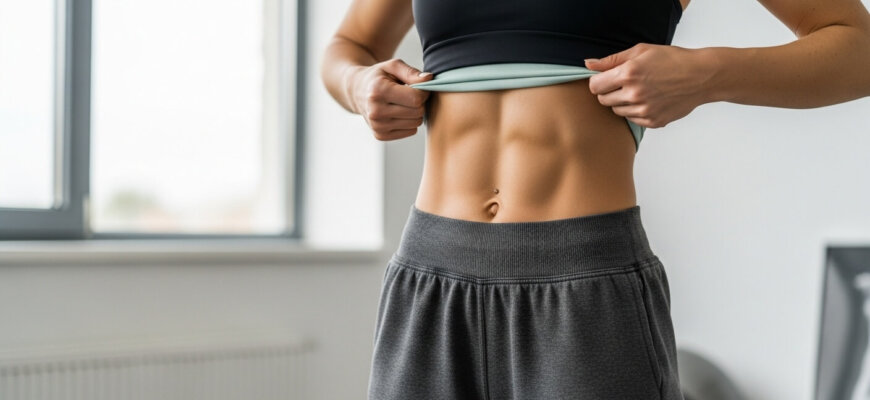
Strong lower abs support your pelvis, improve posture, and help you move better in daily life. But here’s what most people don’t realize: there’s no separate “lower abs” muscle you can isolate. What we call lower ab workouts actually train your rectus abdominis, transverse abdominis, and obliques together. The key to making these exercises work is mastering pelvic control and avoiding hip flexor dominance. This guide shows you the most effective moves you can do at home with no equipment.
- Why your lower abs need more than crunches
- How the transverse abdominis supports your spine during movement
- Why hip flexor dominance reduces lower ab workout effectiveness
- How to perform 5 best lower ab moves with proper form
- Leg raises, reverse crunches, and mountain climbers breakdown
- Plank variations and dead bugs for at home lower abs training
- When your lower abs exercises stop working (and what to change)
- How to modify intensity for beginners versus advanced trainees
- Hip hiking, neck pulling, and breathing errors to avoid
- FAQ
- How often should I train my lower abs each week?
- Can I get visible lower abs without doing direct ab workouts?
- What’s the difference between lower abs exercises and hip flexor exercises?
Why your lower abs need more than crunches
How the transverse abdominis supports your spine during movement
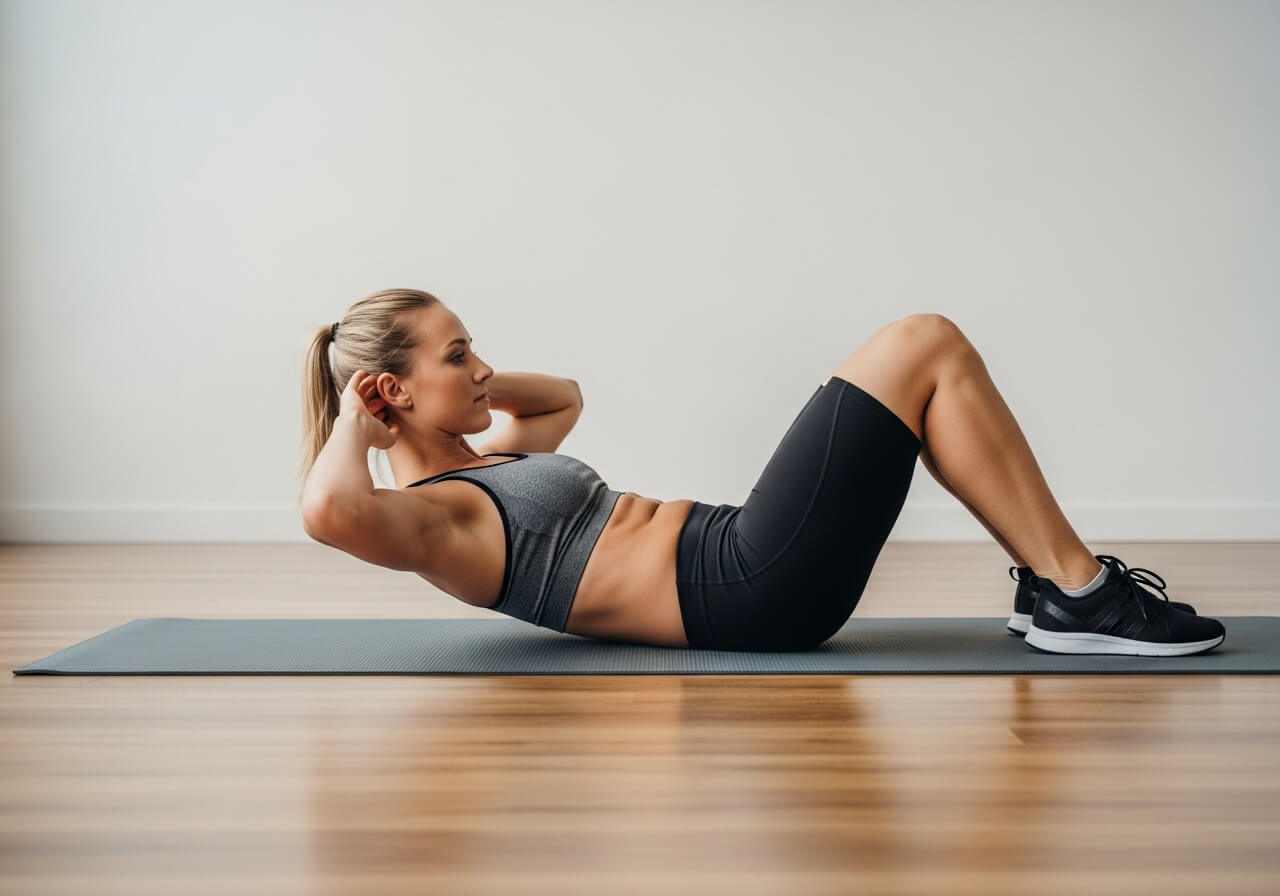
The transverse abdominis is your body’s natural weightlifting belt. This deep core muscle wraps around your torso and activates before you even lift your arms or legs. When you brace properly—gently draw your navel toward your spine and maintain that tension—you create intra-abdominal pressure that protects your lower back and improves force transfer between upper and lower body. This stabilization is what makes lower ab exercises effective, not just leg movement alone.
Why hip flexor dominance reduces lower ab workout effectiveness
If you feel most lower abs exercises in the front of your hips rather than your abdomen, your hip flexors are taking over. According to Mayo Clinic, swinging your legs quickly or letting your lower back arch creates momentum that shifts work away from your abdominal muscles. Keep your pelvis in a slight posterior tilt—tailbone slightly tucked—and move slowly to ensure your abs stay engaged throughout each rep.
How to perform 5 best lower ab moves with proper form
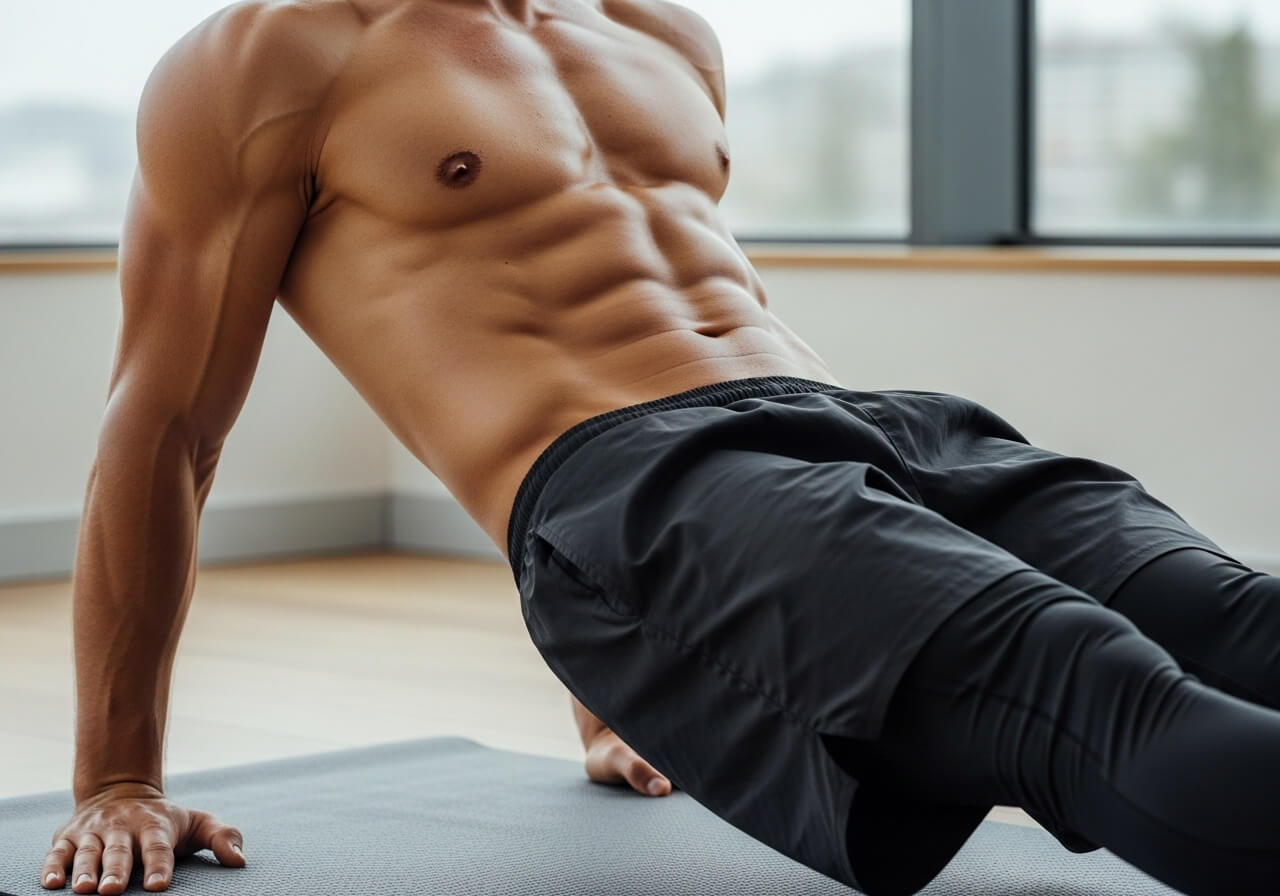
Leg raises, reverse crunches, and mountain climbers breakdown
Reverse crunches: Lie on your back with knees bent and feet flat. Press your lower back into the floor, then lift your hips slightly while curling your knees toward your chest. Lower back down with control. This emphasizes the abdominal shortening phase without hip flexor dominance.
Hanging leg raises: Hang from a pull-up bar with shoulders engaged. Slowly lift your legs to 90 degrees while keeping them straight. Avoid swinging by initiating from a dead hang. Beginners can bend their knees or raise only to 45 degrees.
Mountain climbers: From a high plank, drive one knee toward your chest while keeping your hips level and core tight. Alternate legs while maintaining plank position. The challenge is resisting lower back extension while moving dynamically.
Plank variations and dead bugs for at home lower abs training
Dead bug: Lie on your back with arms extended toward the ceiling and knees bent 90 degrees. Slowly lower one arm overhead while straightening the opposite leg toward the floor, keeping your lower back pressed down. Return to start and switch sides. This teaches coordinated core control without spinal compression.
Rocking plank: In forearm plank, gently rock your body forward and backward about two inches, maintaining core tension throughout. The instability forces your transverse abdominis to work harder to stabilize your spine.
When your lower abs exercises stop working (and what to change)
How to modify intensity for beginners versus advanced trainees
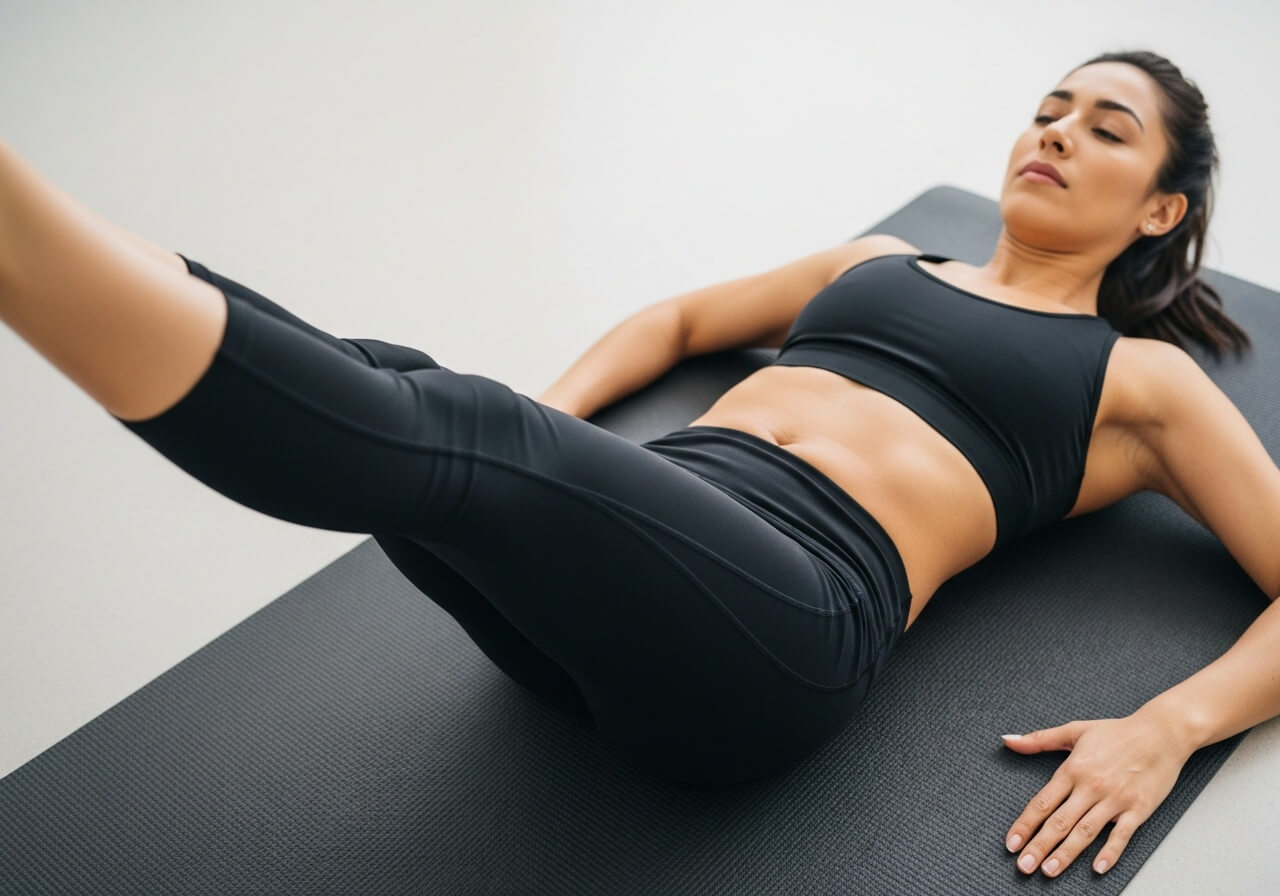
Start with dead bugs and reverse crunches to learn proper muscle activation. Once you can perform 12 controlled reverse crunches without feeling it in your hip flexors, progress to hanging knee raises or extended dead bugs. Advanced trainees can slow the eccentric phase to 3-4 seconds, use straight legs instead of bent, or add plank-to-push-up flows for increased complexity.
Hip hiking, neck pulling, and breathing errors to avoid
Hip hiking: Yanking your knees toward your chest using momentum instead of muscle control defeats the purpose. Place your hands under your lower back to maintain floor contact throughout the movement.
Neck pulling: Tugging your head forward during crunches strains your neck. Keep your chin slightly tucked and focus on ribcage movement instead.
Holding your breath: This reduces core stability. Exhale during the exertion phase (when lifting) and inhale during the return to maximize effectiveness.
FAQ
How often should I train my lower abs each week?
Train your entire core 2-3 times per week with at least 48 hours between sessions. Your abdominal muscles work as a unit, so focus on quality movements each session rather than daily high-volume work.
Can I get visible lower abs without doing direct ab workouts?
Visible abs primarily depend on overall body fat percentage. According to National Institutes of Health, reducing body fat through nutrition and full-body exercise creates the conditions for visibility. Direct core work builds the underlying muscle, but won’t create definition if body fat covers the area. You need both elements working together.
What’s the difference between lower abs exercises and hip flexor exercises?
True lower ab activation requires pelvic control and posterior tilt, while hip flexor exercises emphasize leg elevation using the muscles at the front of your hips. If you feel tension in your hip crease rather than deep in your abdomen, reduce your range of motion and slow down your tempo.
These lower ab workouts will build a stronger, more stable core when done consistently with proper form. Start with one or two moves that feel manageable, master the technique, then gradually increase complexity. Your daily movements—from carrying groceries to playing with kids—will feel more stable and controlled.