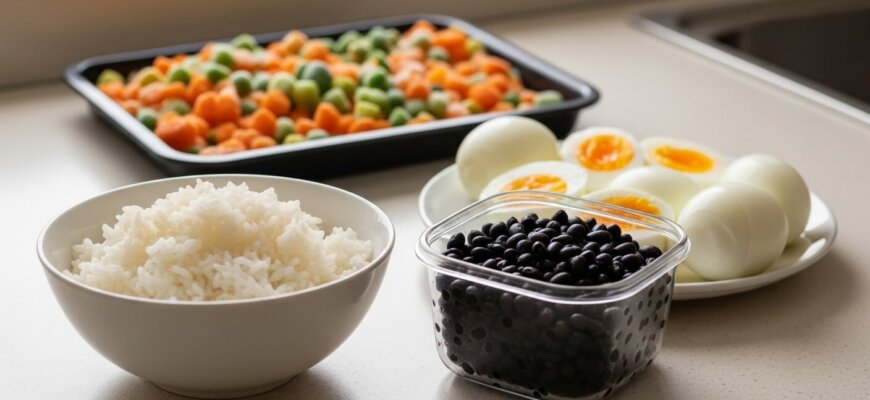
Getting fit doesn’t require a grocery bill that breaks the bank. The difference between success and failure on a fitness budget comes down to choosing practical whole foods over supplements and planning meals around affordable staples. This article shows you how to fuel muscle building and fat loss with ordinary supermarket foods.
- Why Cheap Protein Sources Work Better Than Expensive Supplements
- Eggs, canned tuna, and Greek yogurt deliver complete amino acid profiles
- Whole food proteins typically cost less per serving than powders
- How to Build a Realistic Budget Meal Prep Routine
- Sunday prep guide using rice, beans, oats, and frozen vegetables
- Portion control techniques that prevent food waste and overspending
- When Budget Constraints Compromise Your Nutrition Goals
- Warning signs you’re underfueling your workouts or recovery
- Simple adjustments to maintain adequate calorie and nutrient intake
- Frequently Asked Questions
- What’s the cheapest source of complete protein for muscle building?
- How much should I budget weekly for fitness-focused meals?
- Can I build muscle effectively without expensive organic foods?
- Conclusion
Why Cheap Protein Sources Work Better Than Expensive Supplements
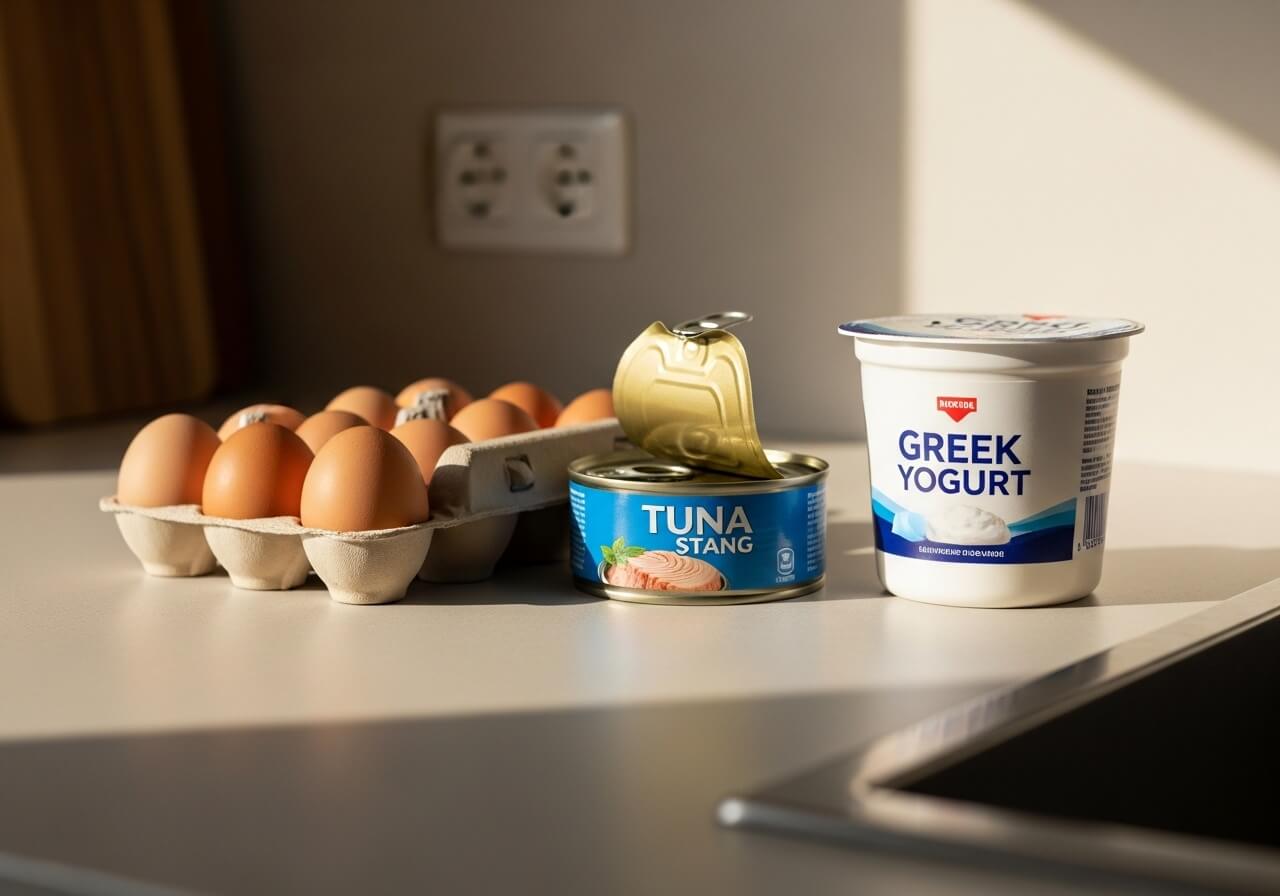
The fitness industry profits from the idea that expensive supplements are necessary for results. In reality, ordinary supermarket proteins often outperform most supplement options on cost, nutrition, and practical usability.
Eggs, canned tuna, and Greek yogurt deliver complete amino acid profiles
A dozen eggs provides all nine essential amino acids your muscles need for repair and growth. Canned tuna does the same. Greek yogurt contains casein and whey protein in naturally balanced ratios. These aren’t “acceptable substitutes”—they’re complete, functional protein sources that support muscle building.
Affordable protein-rich foods like eggs, tuna, yogurt, and beans are practical alternatives to expensive options, and they come with bonus micronutrients—iron, B vitamins, selenium—that isolated supplements skip entirely.
Whole food proteins typically cost less per serving than powders
A single egg costs roughly $0.25. Three eggs deliver 18 grams of protein for under $0.75. A can of tuna typically costs $0.80 to $1.20 and delivers 20+ grams of protein ready to eat. Greek yogurt at $0.50 to $1.00 per serving provides 15–20 grams of protein plus probiotics. A standard protein powder serving often runs $1.50 to $4.00 and provides no fiber or significant micronutrients.
The math often favors whole foods. If you’re spending money on supplements while skipping affordable protein sources, you may be paying more for less nutrition overall.
How to Build a Realistic Budget Meal Prep Routine
Meal prep failures usually happen because people plan too ambitiously or pick ingredients that don’t store well. A budget-friendly approach works when it uses foods that stay fresh, combine easily, and repeat throughout the week without becoming intolerable.
Sunday prep guide using rice, beans, oats, and frozen vegetables
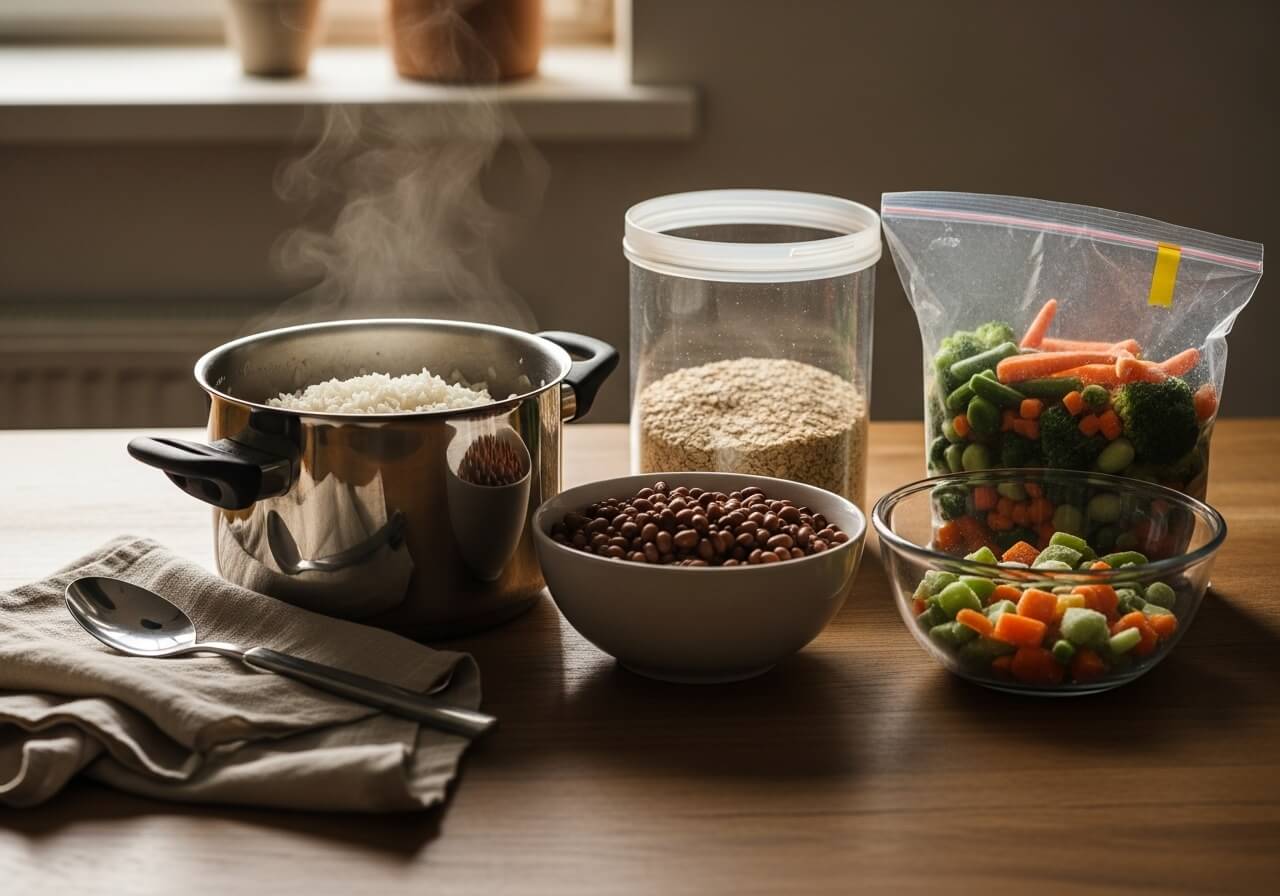
Cook 2–3 cups of dry rice until tender. In a separate pot, simmer 2–3 cups of dry beans or lentils with salt until soft. Store 4–5 cups of oats in an airtight container. Buy frozen vegetables—broccoli, peas, carrots, spinach, peppers—which tend to be cheaper than fresh, last longer, and require zero prep.
These four components form the foundation of every meal for the week. Rotate combinations to break monotony: oats with banana and peanut butter for breakfast, rice with beans and frozen vegetables for lunch, eggs or canned tuna with any of these bases for dinner.
Batch-cooking staples like rice, beans, oats, lentils, and frozen vegetables reduces food waste and simplifies portion control. Buy eggs, canned tuna, and milk or Greek yogurt as interchangeable protein options.
Portion control techniques that prevent food waste and overspending
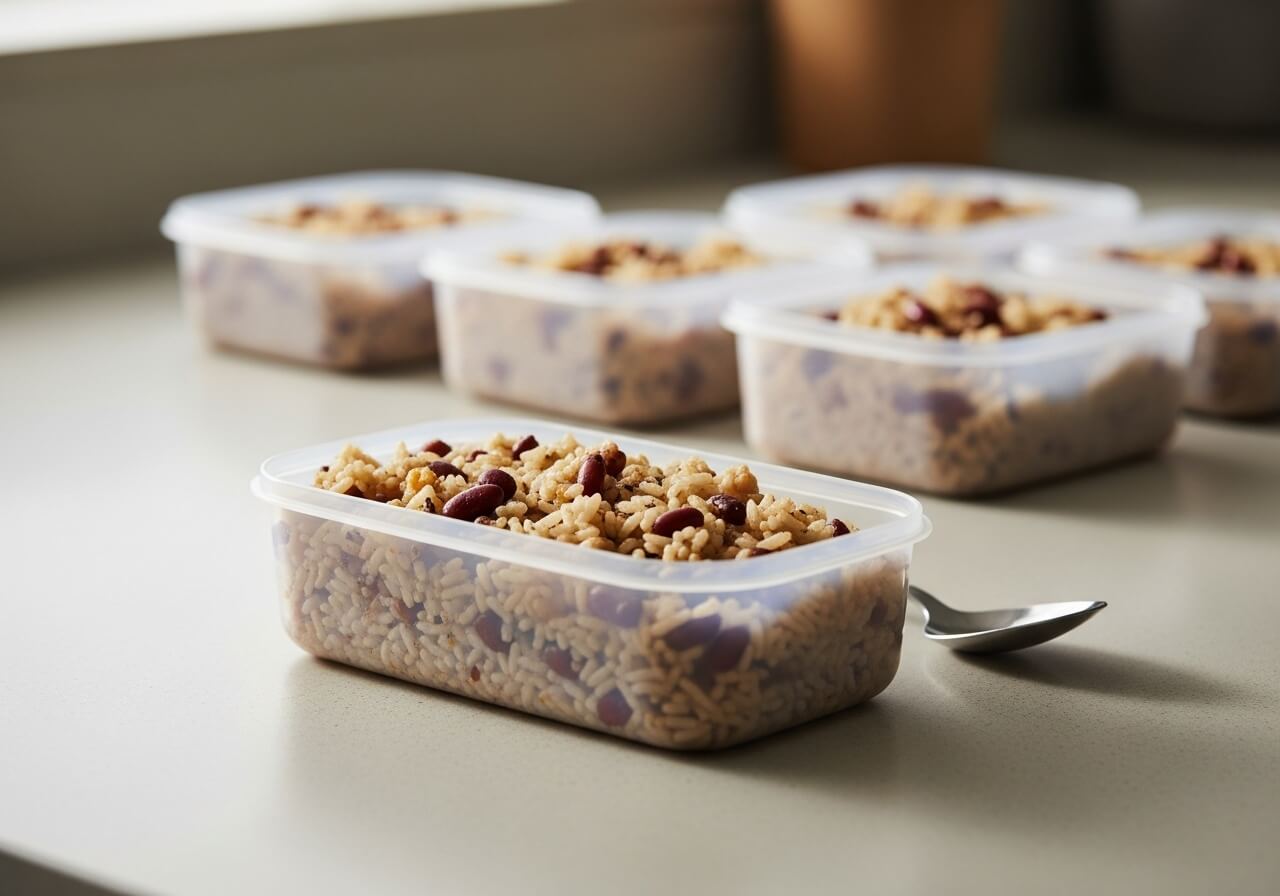
Measure your cooked portions once, then use that container size consistently. If you fill a standard plastic container with your rice-and-beans base, you’ll know exactly how many calories and grams of protein you’re eating—and how many containers to cook for the week.
Most food waste happens because people cook too much without a clear plan. Use containers you’ll actually transport to work or store easily at home. Cook only for the days you’ll eat at home. If you go out three times a week, prep three days’ worth of meals, not seven.
When Budget Constraints Compromise Your Nutrition Goals
Cutting food costs too aggressively creates a real trap: you may eat less than your body needs to train, recover, and build muscle. The result isn’t budget success—it’s underfueling that can erase your training progress.
Warning signs you’re underfueling your workouts or recovery
You feel weaker in the gym or struggle to complete workouts you normally handle. Your energy dips noticeably after training. You’re hungry most of the day or notice cravings intensifying. Your sleep quality drops or you wake up frequently. You feel moody, irritable, or unusually fatigued.
These aren’t signs of successful budgeting—they suggest your calorie or protein intake has fallen below what your training demands. Underfueling doesn’t save money long-term because it can slow progress and increase injury risk.
Simple adjustments to maintain adequate calorie and nutrient intake
If you recognize these warning signs, try adding back one affordable option: buy eggs in bulk (20+ at a time for discounts), add peanut butter to meals for cheap calories and protein, include canned beans in every lunch, or redirect one supplement purchase per month toward more canned fish, eggs, or milk.
The goal isn’t maximum restriction—it’s intelligent restriction. You need enough food to fuel your workouts and recovery. Rice, beans, eggs, and frozen vegetables are all inexpensive. The key is eating a sufficient amount of these foods, not eating as little as possible.
Frequently Asked Questions
What’s the cheapest source of complete protein for muscle building?
This depends on your local prices and current sales. Eggs bought in bulk often cost $0.20 to $0.30 each and provide complete protein with all essential amino acids. Canned tuna ($0.80–$1.20 per can) and dried beans or lentils (roughly $0.15–$0.30 per cooked serving when bought dry) are also affordable complete proteins. Greek yogurt ranges from $0.50 to $1.00 per serving. Compare prices at your local store to find your best option.
How much should I budget weekly for fitness-focused meals?
A realistic weekly budget ranges from $35 to $60 per person for basic meals built around rice, beans, eggs, canned fish, oats, frozen vegetables, and milk or yogurt. This assumes store brands and watching for sales. If you add fresh meat or specialty items, your budget will increase. The key is finding an amount that lets you eat enough to fuel your training without creating underfueling problems.
Can I build muscle effectively without expensive organic foods?
Yes. Muscle building depends on adequate protein intake, total calories, and consistent training—not whether your food is organic. Conventional eggs, frozen vegetables, regular canned tuna, and standard milk provide the same protein and nutrients for muscle repair and growth. If your budget is tight, skip the organic label and buy what you can afford in volume.
Conclusion
Affordable fitness nutrition comes down to choosing whole-food proteins and planning your week around staples that don’t waste money. Start this week by buying eggs, rice, beans, and frozen vegetables. Spend Sunday cooking a batch of each. You’ll have the framework for every meal for the next several days—and a practical foundation for budget muscle building that actually fits your life.