
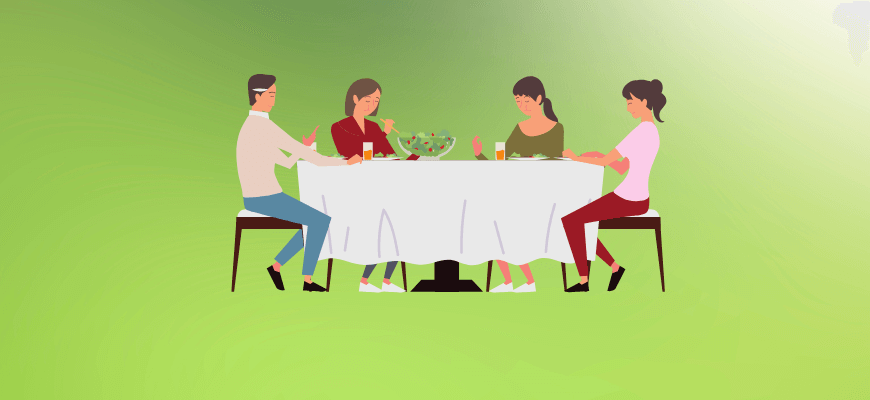
The Importance of Family Meals
Last month, I focused on the importance of enjoying meals together as a family. Family meals enrich the lives of both parents and children—not just by providing nourishment, but by offering a time to share daily achievements, discuss concerns, and offer encouragement and advice. Conversations during meals help build relationships, strengthen family unity, and improve communication and social skills.
Studies have shown that family meals are linked with better language achievement, academic grades, healthier eating habits, obesity prevention, and fewer risk-taking behaviors (Purdue Univ 2010). Children who regularly eat with their families are also more courteous and have a greater sense of positive emotional well-being (Baker 2010). These are encouraging reasons to embrace family mealtime.
Celebrating Success and Overcoming Challenges
If your family has made meals together a priority after reading my article “Making Family Meal Time a Reality,” give everyone a pat on the back for a job well done! Notice the positive benefits of eating—and perhaps even preparing—meals together. If you’re still facing challenges, keep at it. It may take a few more family meals to see the benefits.
Sometimes, poor behavior can make family meals challenging. While meals with kids or teenagers may not always be perfect, establishing a few simple and fair guidelines can make mealtime enjoyable most of the time.
Practical Tips for Enjoyable Family Meals
- Encourage Self-Serving: Allow children to serve themselves as soon as they are able. This helps them learn appropriate portion sizes. A handy tip is to visualize the size of their stomach as roughly the size of both hands placed side-by-side.
- Provide Age-Appropriate Portions: Offer smaller portions with a variety of healthy choices, allowing children to listen to their hunger and satiety cues. Monitor eating patterns to ensure that variations are simply part of normal growth spurts.
- Control Portion Sizes: Research indicates that larger portions lead to eating 30 to 50% more food. Serve child-sized portions initially, and allow children to ask for more if they’re still hungry.
- Avoid the “Clean Plate” Mentality: Encourage children to stop eating when they are full. If they begin to play with their food, become restless, or express that they are finished, gently remove the food and allow time for conversation.
- Stay Together at the Table: Establish a rule that all family members remain at the table until everyone is finished. This helps slow down eating and reinforces the importance of shared family time.
- Create Uninterrupted Mealtime Routines: Make it a rule to eat at the table without distractions—turn off cell phones, iPods, and televisions. Parents should lead by example.
- Delay After-Dinner Snacks: Wait at least 20 minutes before serving an after-dinner snack or dessert. This pause allows the body to signal fullness, encouraging children to eat based on hunger rather than habit.
- Offer Healthier Snack Options: If children need a snack after dinner, encourage them to prepare their own using nutritious choices such as:
- A bowl of cereal with fruit
- Fruit with a glass of milk
- Yogurt with berries
- A banana or an apple with peanut butter
- A slice of whole wheat toast with peanut butter and banana slices
- Air-popped, natural, or light butter popcorn
- Chocolate milk or hot chocolate with graham crackers
- Establish Family Rules Around Eating: Teach children to build a balanced plate by including at least three of the five food groups. Encourage them to select whole grains, fresh or frozen fruits and vegetables, lean proteins, and low-fat dairy, aiming for a colorful plate that is both visually appealing and nutritious.
The Lasting Benefits
Family meals are more than just a time to eat; they are an opportunity to share news, solve problems, and teach manners while fostering healthy eating habits. Establishing positive mealtime routines helps children—and parents—develop the behaviors needed for a lifetime of healthy eating and overall well-being. Strive to make healthy family meals a priority and enjoy the benefits of properly fueled bodies and connected hearts.
